A Rosetta Stone for the space age: Barrelhand and UNESCO’s Memory Disc comes to Powerhouse
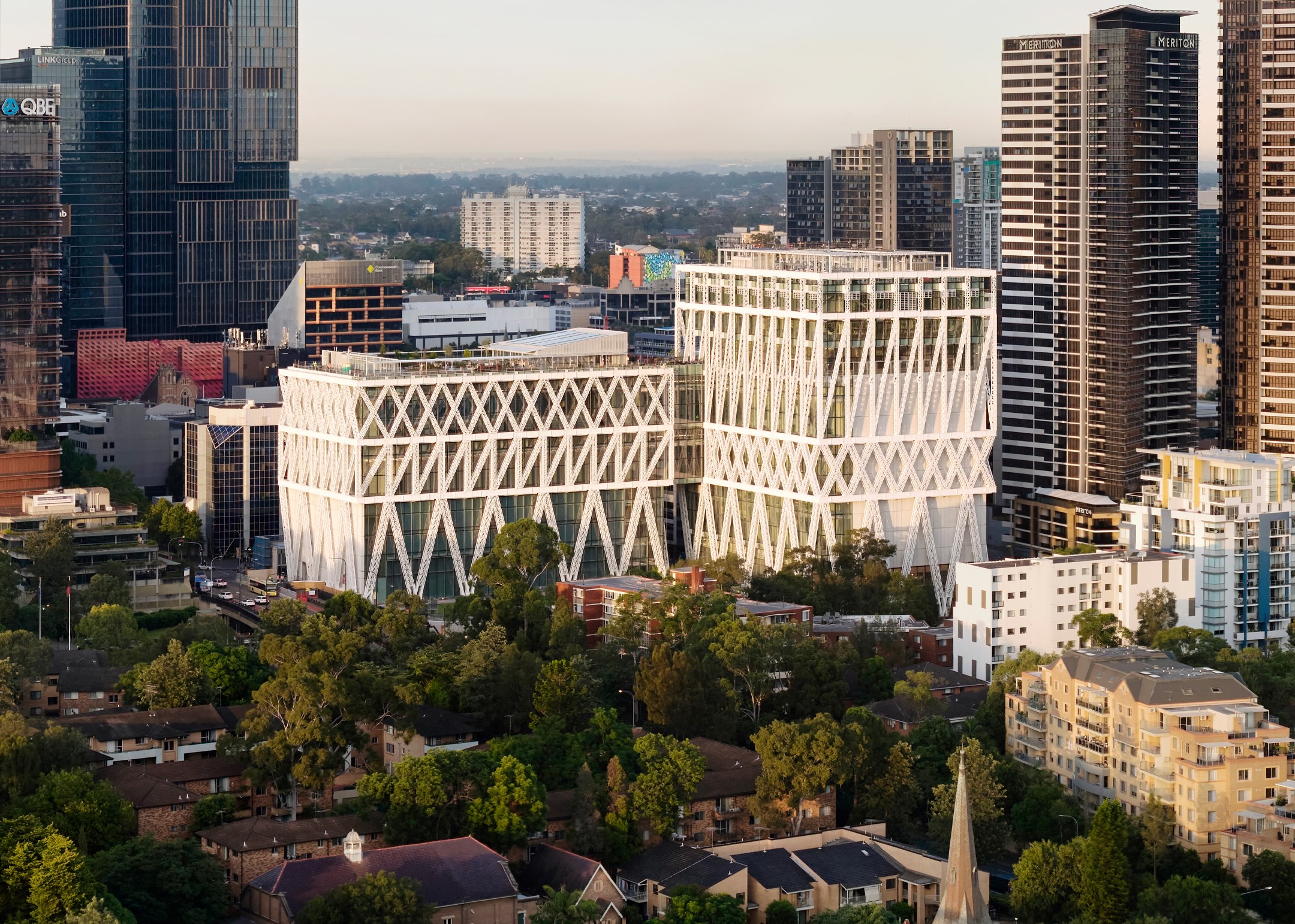
SAN FRANCISCO, November 18th 2026 - Barrelhand’s Memory Disc went on display on 7 November 2026 in Task Eternal at Powerhouse Parramatta, Australia’s newest museum and largest cultural infrastructure project since the Sydney Opera House. Developed in collaboration with UNESCO, the disc explores how we carry a connection to Earth into space and communicate with those who may one day encounter what we leave behind.
Originally conceived as a companion for astronauts, Memory Disc offers a connection to home through art, language and stories. It also invites future discoverers to engage with human expression through curiosity and interpretation, without assuming a shared language or understanding of our world. Its development over more than six years has brought together a plethora of artists, cultural institutions and space mission partners from around the world.
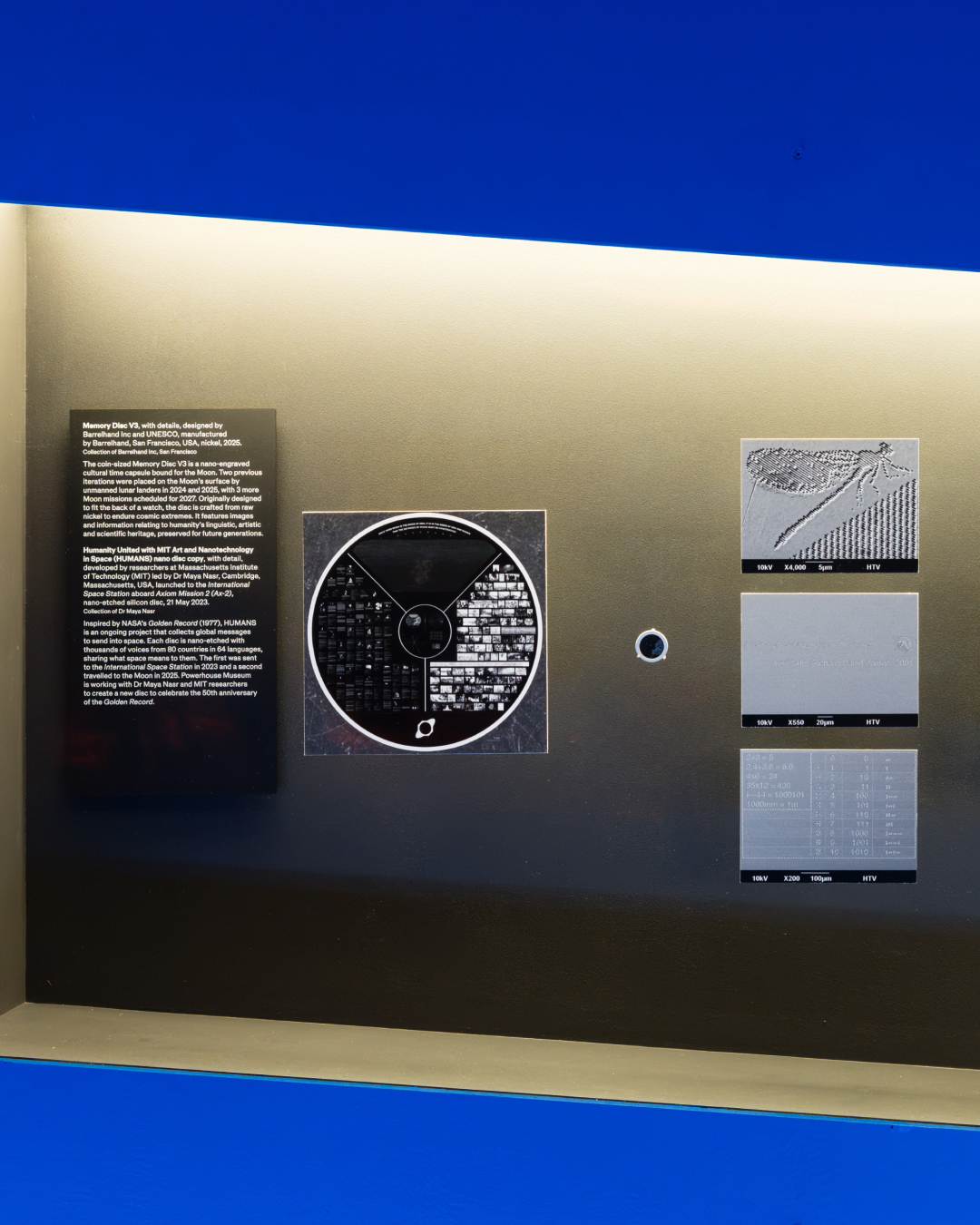
For the first time, Memory Disc is being presented to the public in a museum exhibition. Alongside the disc itself, an enlarged reproduction and electron-microscope images reveal details invisible to the naked eye, including the disc’s measurement references and an audio waveform by Richard David James, also known as Aphex Twin. Visitors can explore the work at Powerhouse Parramatta through May 2029.
Memory Disc is exhibited in Task Eternal’s space messaging section, near original material relating to the Voyager Golden Record and the Arecibo Message. The wider exhibition brings together loans and contributions from NASA, MIT, the Smithsonian National Air and Space Museum, the British Museum and the Australian Space Agency.
“Memory Disc is both an archive and a bridge - designed to resonate with any intelligence driven by curiosity."
Michael Sorkin, co-founder of Barrelhand
The 19 mm nickel disc holds around 1,000 pages’ worth of selected material. Using NanoFiche technology, its content is engraved at microscopic scale and designed to remain readable for millions of years. The archive requires no power to retain its information and can be read through magnification without proprietary software.
V3 includes 106 artworks, from prehistoric cave paintings to contributions by contemporary artists including Kara Walker, Yoshitaka Amano, George Rouy and Chloe Wise. Alongside them are the original French edition of Antoine de Saint-Exupéry’s Le Petit Prince, a visual waveform artifact by Richard David James, and paintings contributed by children through San Francisco nonprofit Real Options for City Kids. Measurement and navigation references offer further clues to interpreting the disc and locating its origins.
Through the collaboration with UNESCO, V3 also includes 286 translations of the opening sentence of UNESCO’s Constitution preamble, including many Indigenous and endangered languages. Like the original Rosetta Stone, the parallel texts offer a potential key to interpretation while expressing a shared idea: that peace must be built in human minds.
Task Eternal explores flight and space through science, technology, art and different knowledge traditions, including First Nations Sky Knowledges such as Yolŋu cosmologies and celestial navigation. This attention to the ways communities understand their place in the universe complements Memory Disc’s exploration of language, identity and connection.
Earlier Memory Disc editions flew on lunar missions in 2024 and 2025, with the first delivered to the Moon aboard Intuitive Machines’ IM-1 mission. V3 is set to follow aboard Griffin-1, with copies on the Griffin lander and Astrolab’s FLIP rover. The mission, operated by Voyager Lunar Systems, formerly Astrobotic, is targeting launch in January 2027.
Barrelhand welcomes cultural institutions, artists and space mission teams interested in contributing to future Memory Disc editions and exploring new ways to connect people through the project.
Learn more about the Memory Disc initiative and our space missions on the Memory Disc page.
About Barrelhand
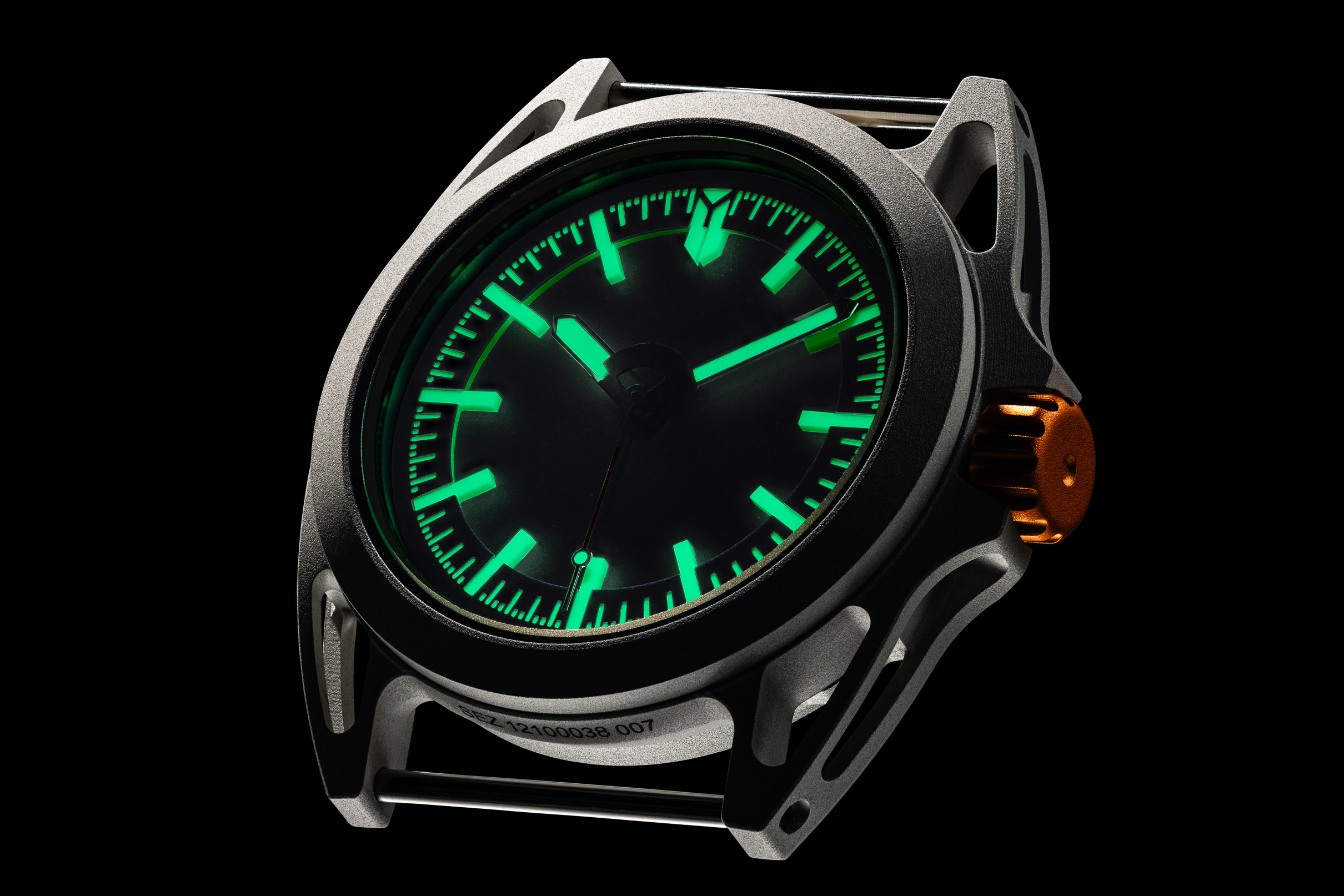
Barrelhand is a California-based company developing tools for human life beyond Earth. Its projects include Monolith, a mechanical tool watch designed for space exploration, and Memory Disc, a nonprofit initiative exploring cultural preservation, communication and our connection to home.
About UNESCO:
UNESCO is a specialized agency of the United Nations seeking to contribute to the building of peace, the eradication of poverty, sustainable development and intercultural dialogue through education, the sciences, cultural, communication and information.
About Powerhouse
Powerhouse is Australia’s largest museum group, caring for a collection of more than 500,000 objects. Through exhibitions, research and learning, it explores the relationships between art, design, science and technology. Its four Sydney sites are Powerhouse Parramatta, Powerhouse Ultimo, Powerhouse Castle Hill and Sydney Observatory.