T-01: Monolith EVA/IVA Testing
%20%20(Website).png)
The harsh environments of space require even harsher hardware testing protocols to ensure they are ready for the next frontier.
Introduction
A new chapter of space exploration is unfolding, with activities accelerating at speeds not seen since the dawn of space exploration. Accurate timekeeping is essential for coordinating Extravehicular Activities (EVA), operations which are performed in the vacuum of space or on planetary surfaces, as well as Intravehicular Activities (IVA), which take place inside pressurized spacecraft. The environment of space is incredibly unforgiving, making redundant offline systems critical as we embark on longer-duration missions, permanent lunar bases, voyages to Mars, and further ventures into the unknown.
Barrelhand aims to contribute to the modern space renaissance by advancing the standard of analog timekeeping and aerospace tool manufacturing. This paper presents the foundational testing of Monolith for EVA qualification as outlined by NASA, along with its relative performance to legacy systems and new standards set.
Monolith builds upon decades of aerospace engineering and technological innovations. The work presented here continues the legacy of earlier spaceflight programs, whose successes and documented limitations provide both inspiration and critical technical guidance for the systems being developed today.
The frontier ahead is fundamentally a collaborative effort. In that spirit, we have open-sourced all insights and Intellectual Property associated with Monolith, as an open invitation to scrutinize, share and improve upon this work together.
Historical and Modern Spaceflight Standards
September 21, 1964: Deke Slayton, director of flight crew operations for NASA and fellow Mercury astronaut, drafted a memorandum to the Procurement and Contracts Division of NASA, stating the need for a standard flight crew wrist watch for all NASA astronauts. (Slayton, 1964)
The memorandum called for a highly durable and accurate watch to be used by Gemini and Apollo flight crews as an essential analog backup for spacecraft timing devices and time critical operations. A set of requirements was outlined to comparatively evaluate off the shelf models under realistic operating conditions. An analysis would also be made after testing for any additional features or modifications that may be required. (Slayton, 1964)
On March 1, 1965 NASA shared the results of its extensive testing:
- Rolex – It stopped running on two occasions during the Relative Humidity Test and subsequently failed during High Temperature Test No. 1 when the sweep second hand warped and was binding against the other hands on the dial. No further tests were run with the Rolex chronographs
- Longines Wittnauer – The crystal warped and disengaged during the High Temperature Test. The same discrepancy occurred on a second Longines Wittnauer during Decompression Test No. 8. No further tests were run with Longines Wittnauer chronographs.
- Omega – It gained 21 minutes during the Decompression Test and lost 15 minutes during the Acceleration Test. The luminescence on the dial was destroyed during testing. At the conclusion of all testing the Omega chronograph operated satisfactorily. (Marx, 2017)
The Speedmaster was then qualified for EVA/IVA use, however there were many weak points apparent during testing that ultimately went unaddressed and unchanged in the last 60+ years. It was shown that timing precision was suboptimal to the desired specifications, and performance would deteriorate during prolonged exposure to EVA and acceleration at takeoff. There are also numerous documentations of failed hardware highlighted by NASA whitepapers through the Apollo moon missions and present day (NASA, 2005). This does not represent the craftsmanship of these critical legacy tools in space history, but rather a demonstration of how harsh the environments of space were on the best tools that faced it.
Sustained presence beyond Earth demands more than equipment - it requires adaptable systems engineered for reliability under extreme environmental stress. Monolith was engineered from the ground up specifically to meet all modern EVA and IVA requirements, incorporating lessons learned from six decades of documented operational experience. After six years of focused R&D following ISO aerospace standards and NASA material guidance, Monolith is ready for its final stage of testing and EVA qualifications.
Below is the exact statement of specifications and tests initially outlined from the Apollo program, along with new standards set and Monolith’s performance during the tests.
Statement of Specifications
1. Accuracy - Must not gain or lose more than 5 seconds over a 24 hour period. Desirable to have an accuracy equal to or better than 2 seconds per 24 hours.
Every Monolith unit features our M1 Engine, built off the SW300 and optimized for temperature and magnetic fields. The units are regulated to average +/-5 s/d in 6 positions before leaving the factory. As we continue to gather more data and upgrade the Monolith platform, our goal is to surpass the dream specs initially outlined.
2. Pressure Integrity - The watch must be immune to large variances in pressure to include a range from 50 feet of water positive pressure to a negative pressure of 10 millimeters of mercury.
Negative pressure (vacuum) has been extensively tested with nominal effects to performance. Test units are able to pass 580m of water resistance (max limit of our machine) with no failures. We have opted to rate the watch at 200m for the time being to bake in a factor of safety. It is also important to note that while this is not designed as a dive watch, its capabilities are able to surpass nearly double the deepest scuba dive ever recorded (Ahmed Gabr: 332m) (Russell, 2021).
In addition to its pressure integrity, we are beta testing our airlock crown feature to early adopters in the Monolith program. The airlock crown can be operated at depth, allowing winding and time setting to be performed under water or in vacuum. Testing has shown the feature to work effectively in vacuum and at depths of up to 30m. Beyond this depth the pressure of the water keeps the crown pushed in limiting the ability to set the time. More data will be needed to adequately certify the features official depth rating, and we invite our customers to test its limits outside of its intended aerospace environment.
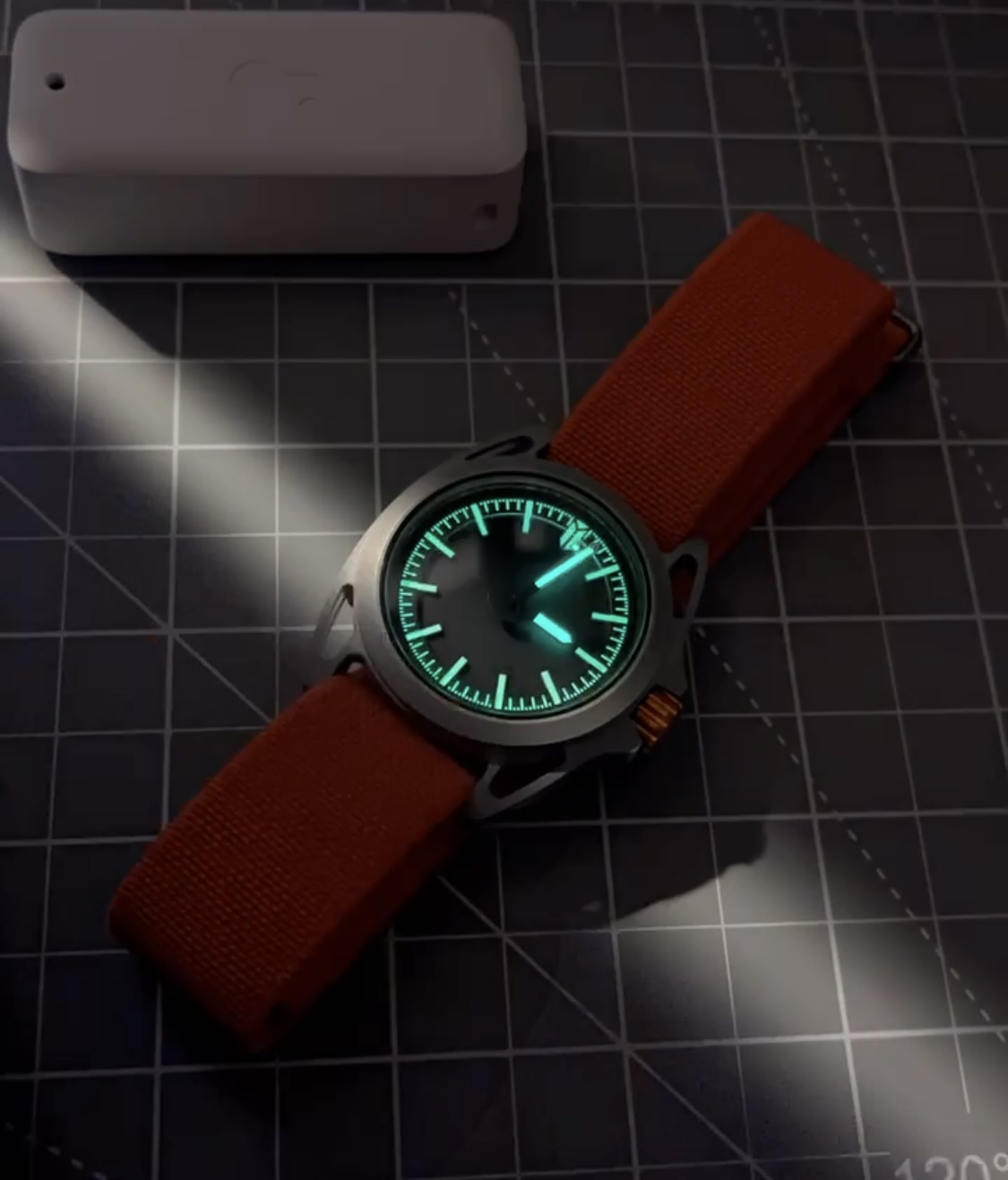
3. Readability - All disks, bands, and figures must be readable in various lighting conditions. Must be readable under both "red" and "white" lighting conditions to or beyond a 5 foot candle illumination intensity. Either a black face with white figures and numerals or black on white is satisfactory. The watch should not cause glare at the high illumination levels. A stainless steel case with a satin finish is preferred.
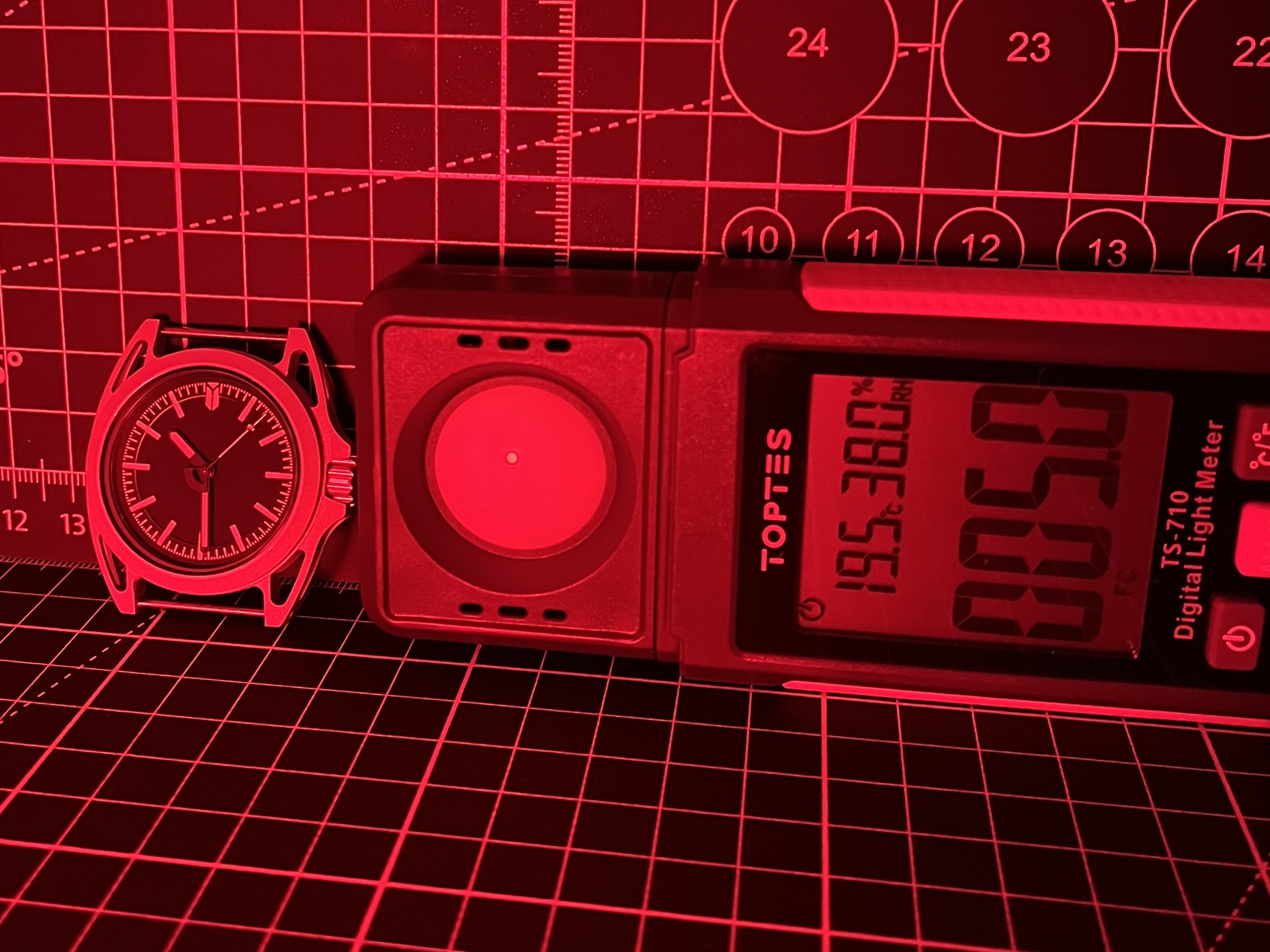
White and red light tests were conducted at 12 inches from the source as outlined with a 5 foot candle (fc) brightness measured by a lightmeter. Testing was further explored from 10,000 fc down to 1 fc brightness while maintaining good visibility throughout, even after luminescent properties had faded.
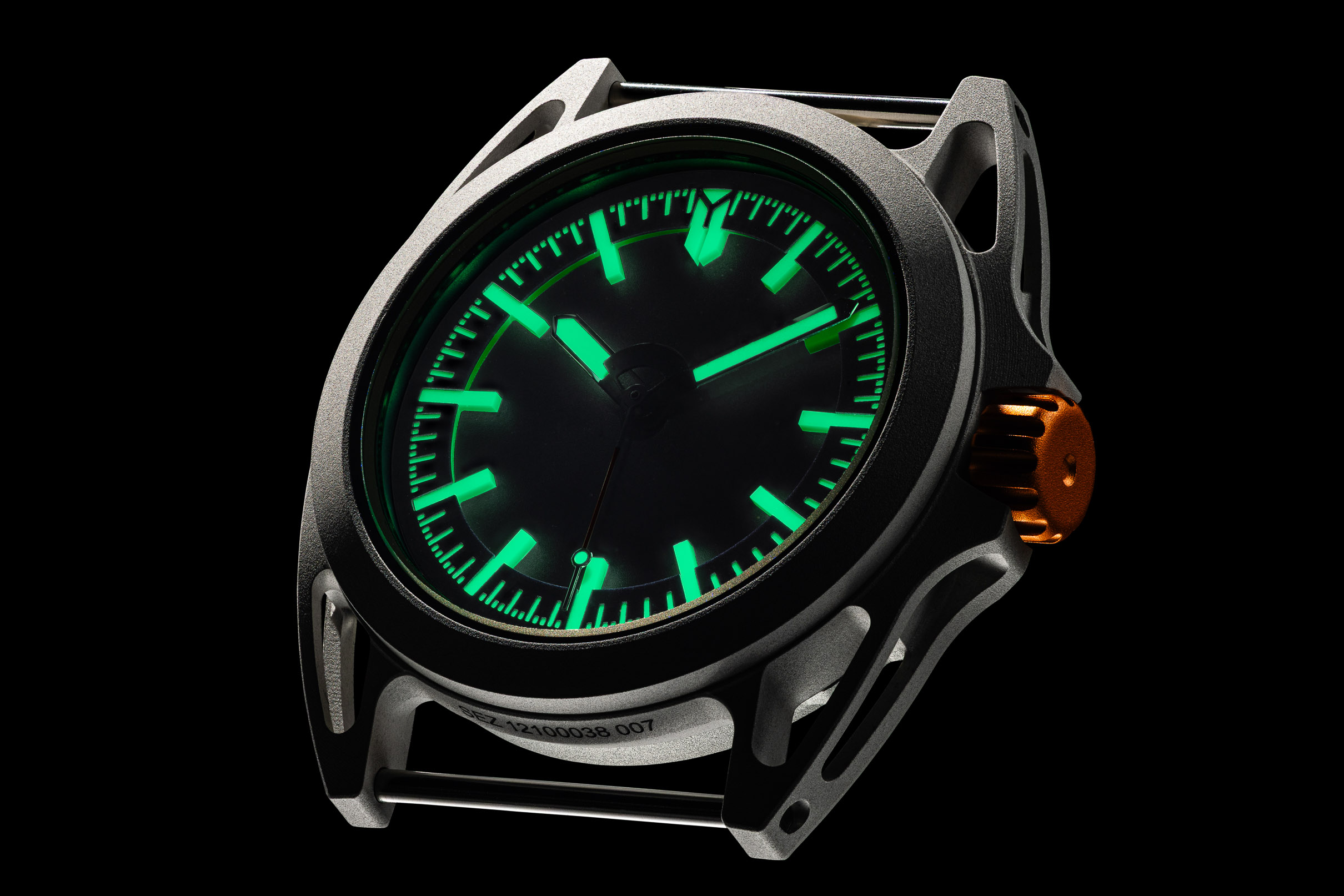
The entire dial construction was developed for EVA use and capable of withstanding temperatures between -120 °C to +120 °C. The Aerolight X2 ceramic piece is molded into a large monolithic block and serves as a solid state light source for all indices. No paints or adhesives were used in its construction to prevent any flaking or degradation as seen during the original Apollo program tests. Lume tests were performed on the X2 and shown to be 87% brighter than traditional X1 grade Super-LumiNova after 1 hour. (RC Tritec, 2025)
The Aerolight lume block is then sandwiched between 2 high vis matte black CuZn34 brass plates that are then laser welded together in a monolithic construction. The Scalmalloy chassis is also treated with a matte sandblast finish to reduce any glare across the entire tool. Our custom C-plane Sapphire window also uses a Magnesium Fluoride coating to reduce glare like traditional AR but far more resilient to extreme temperatures and radiation exposure (NASA, 1988).
4. Must be shockproof, waterproof, and antimagnetic. In addition, the face cover must be shatterproof.
Monolith’s M1 Engine has been upgraded with an amagnetic nickel-phosphorous escape wheel and pallet fork, Nivaflex mainspring, Nivatronic hairspring collet and a Non-magnetizable Glucydur balance. The M1 engine is then ISO764 / DIN 8309 certified to resist exposure to a direct current magnetic field of 4800 A/m.
As we get into the official tests below we will demonstrate Monolith’s performance over various high impacts and acceleration exposures. Water resistance, as we've outlined previously, far surpasses the initial requirements, and although it is designed for space exploration it can easily withstand any dive a human can subject it to.
5. May be powered electrically, manually or the self-winding type; however, it must be capable of being manually wound and re-set.
Monolith features automatic bidirectional winding with a 50 hour power reserve and stop seconds for precision time setting. The watch can be manually wound and set via the Airlock crown both in vacuum and high pressure environments.
6. Reliability - the Manufacturer must guarantee the watch to operate properly under normal conditions for at least one year time period. Performance data and specifications should be supplied by the manufacturer. Manufacturer guarantee and/or warranty should also be included.
Each Monolith comes with a 2 year warranty along with all the performance data and specifications of the EVA/IVA testing outlined below.
Testing
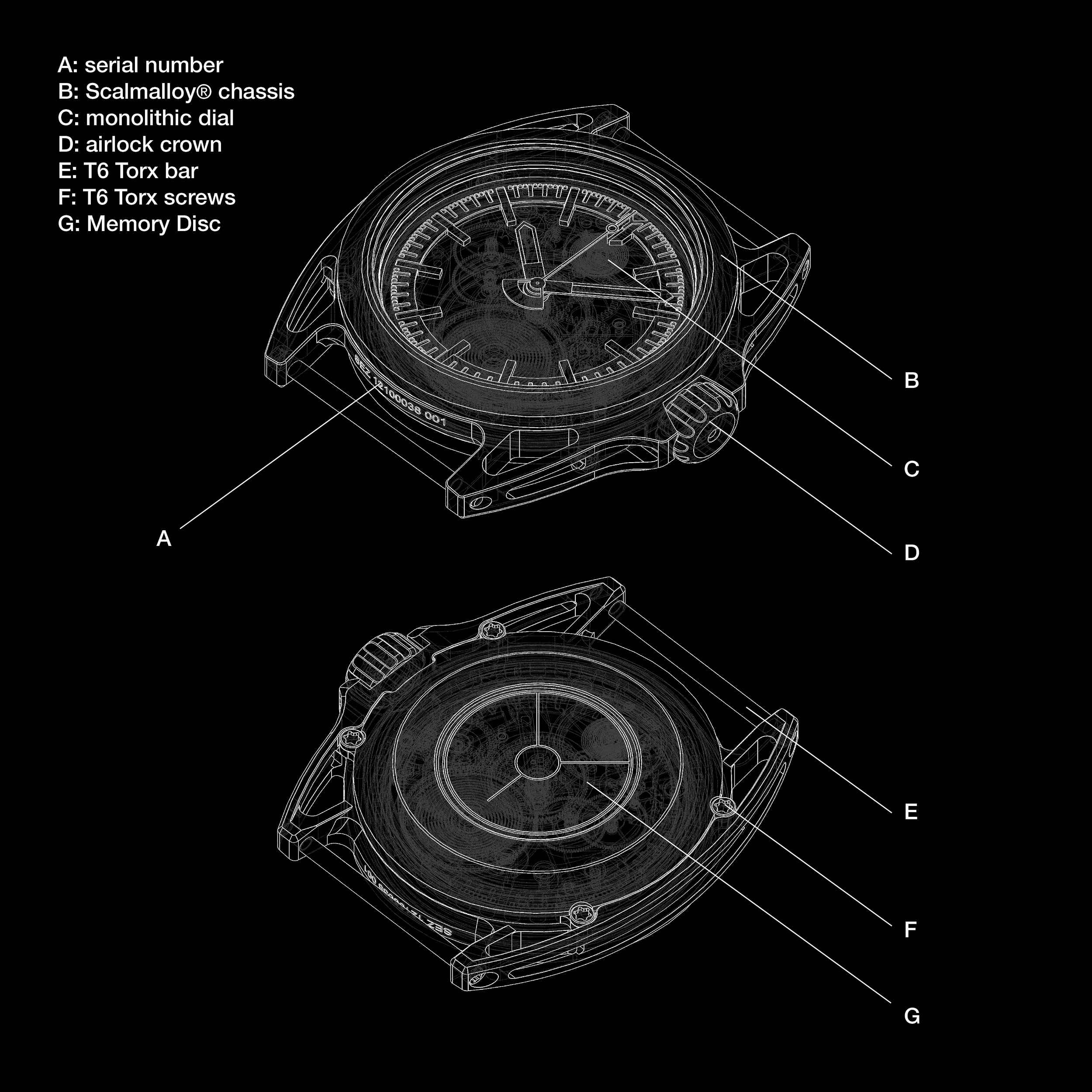
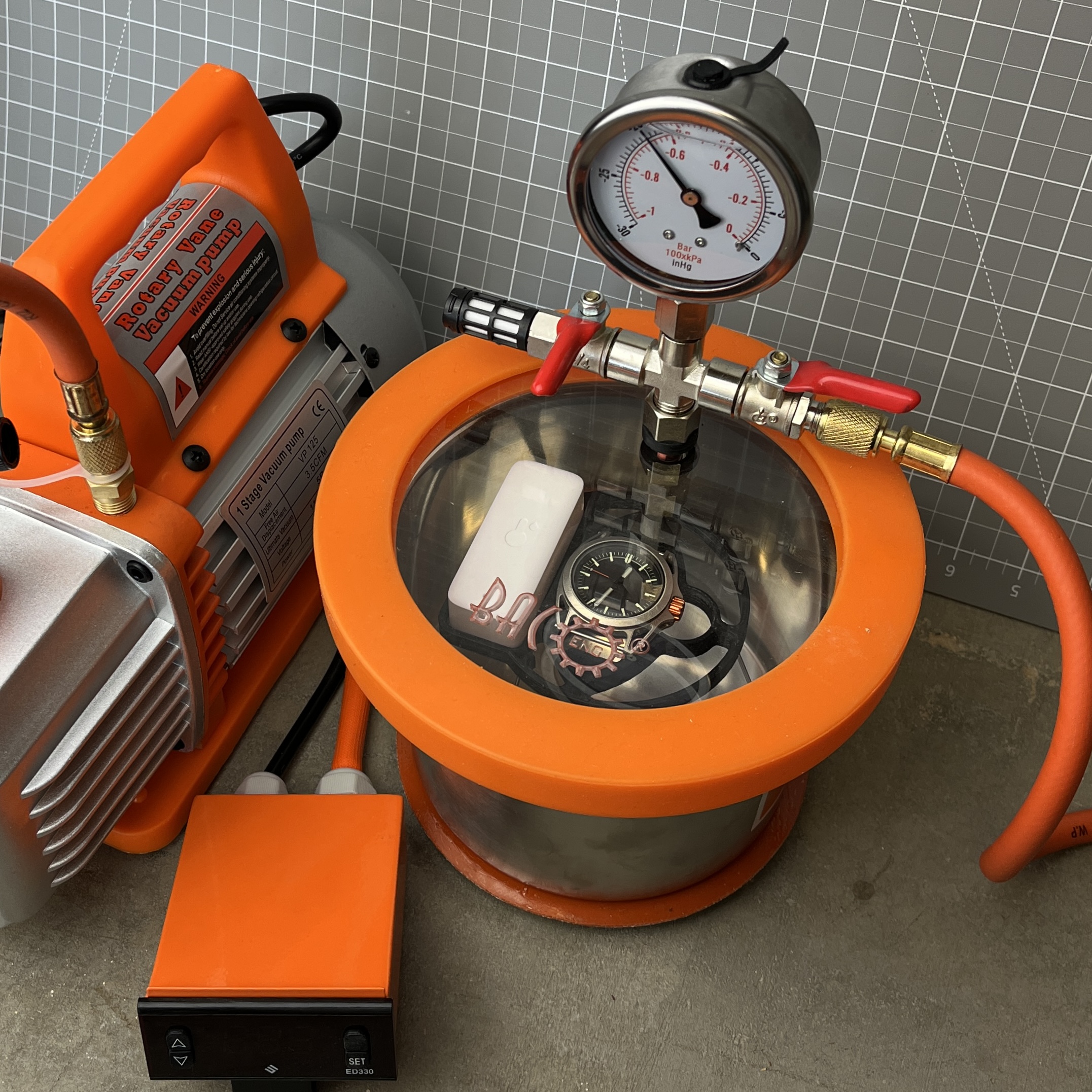
All testing done below was performed on our Monolith MK20 Prototype series (Fig. 2). Environment data was recorded once a minute on a bluetooth Switchbot Thermo-Hygrometer W3400010 and visualized for reference. Unless otherwise specified, timing results were recorded across 6 positions immediately before and after testing on a Weishi 1000 timegrapher.
Results are represented in each figure as a delta (change between start and end time accuracy).
To be "flight-qualified by NASA for all manned space missions", the watch must pass all of the following tests numerous times without failure of any kind. (NASA memo, 2008)
1. High Temperature – 48 hours at a temperature of 160 °F (71 °C) followed by 30 minutes at 200 °F (93 °C). For the high temperature tests, atmospheric pressure shall be 5.5 psi (0.35 atm) and the relative humidity shall not exceed 15%.
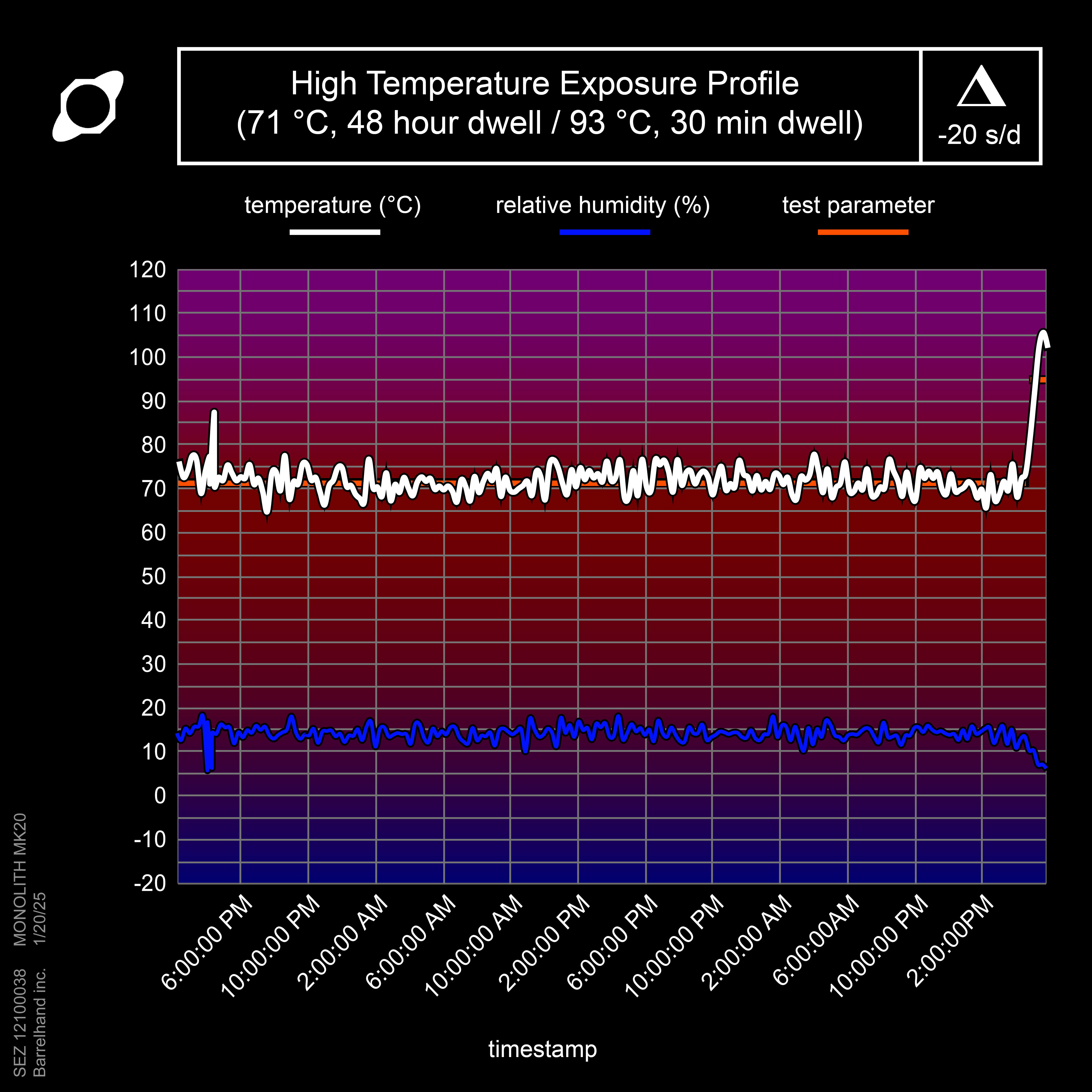
Monolith was subjected to 48 hours at 71 °C followed by 30 minutes at 93 °C. Pressure was held to 0.35 atm throughout testing and average relative humidity was maintained at 15%. The test unit experienced an average loss of 20 s/d across all 6 positions. This aligns with mechanical principles as the hairspring expands in extreme heat, causing oscillation rate to decrease (Forster, 2022). It is difficult to determine how much of this loss was also attributed to the lower band of its power reserve towards the end of its 48 hour testing cycle. Further testing will need to be performed with potential winding mid testing to isolate the variable.
Monolith performed well beyond expectations as this was the test that initially failed the Rolex and Longines units during the Apollo programs EVA testing (see intro documentation). -20 s/d is well within acceptable range for such a prolonged high temp exposure. For reference the longest spacewalk ever recorded was 9 hours and 6 minutes by Cai Xuzhe and Song Lingdong (Barron, 2024). Our aircore demonstrated great insulation of the oscillator. This could be further improved by increasing the aircore volume in the chassis or upgrades to the oscillator itself.
It is important to note that during testing our thermo-hygrometer began to deform and warp from the high temperatures (Fig. 5). The recording device is made of a high strength ABS with a similar glass transition temperature to Hesalite/ PMMA (Acrylic) (~105 °C) (Guide to glass transition temperature, 2025).
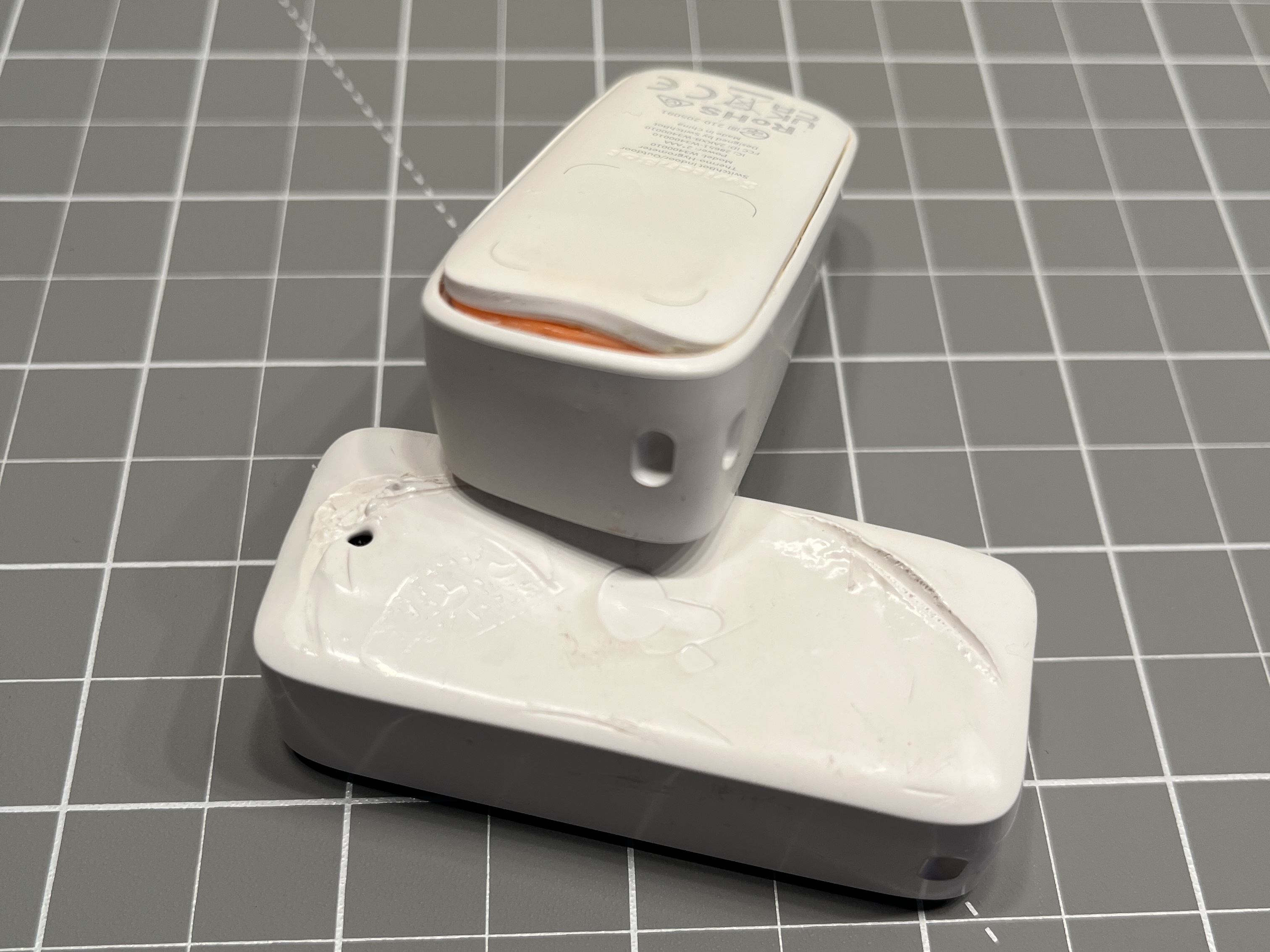
This is further confirmed and documented in the original EVA testing as the Longines Wittnauer crystal warped and disengaged during the High Temperature Test. We would expect the same for any Hesalite/acrylic window, however this was not publicly documented on the Speedmaster to our knowledge. This type of failure mode does however show up during real world use cases like Astronaut Dave Scott’s Speedmaster crystal popping during Apollo 15 (Broer, 2015). It is possible that testing was performed on a sapphire version of the speedmaster, but this would then invalidate the impact/shatter resistance needed for IVA use. If you have further insights or information regarding original testing please message us contact@barrelhand.com
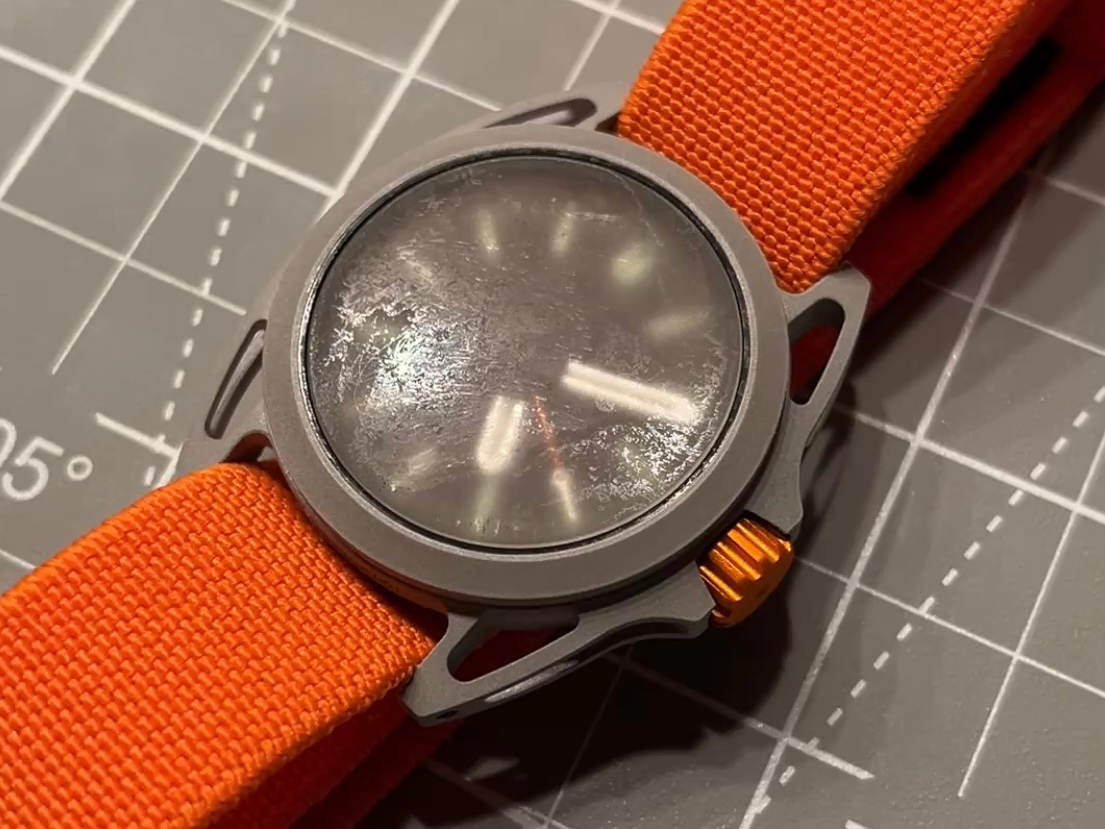
2. Low Temperature – Four hours at a temperature of 0 °F (-18 °C)
The test unit was subjected to 2 hours ranging from -18 °C to -6 °C before stable final temperature and testing officially began. The test was performed at 1 atm with a dew point average of -26 °C. Performance was nominal with only a 4 s/d average gain across 6 positions immediately after test completion. This aligns with mechanical principles as the hairspring becomes shorter and more rigid in extreme cold, causing oscillation rate to increase (Forster, 2022).
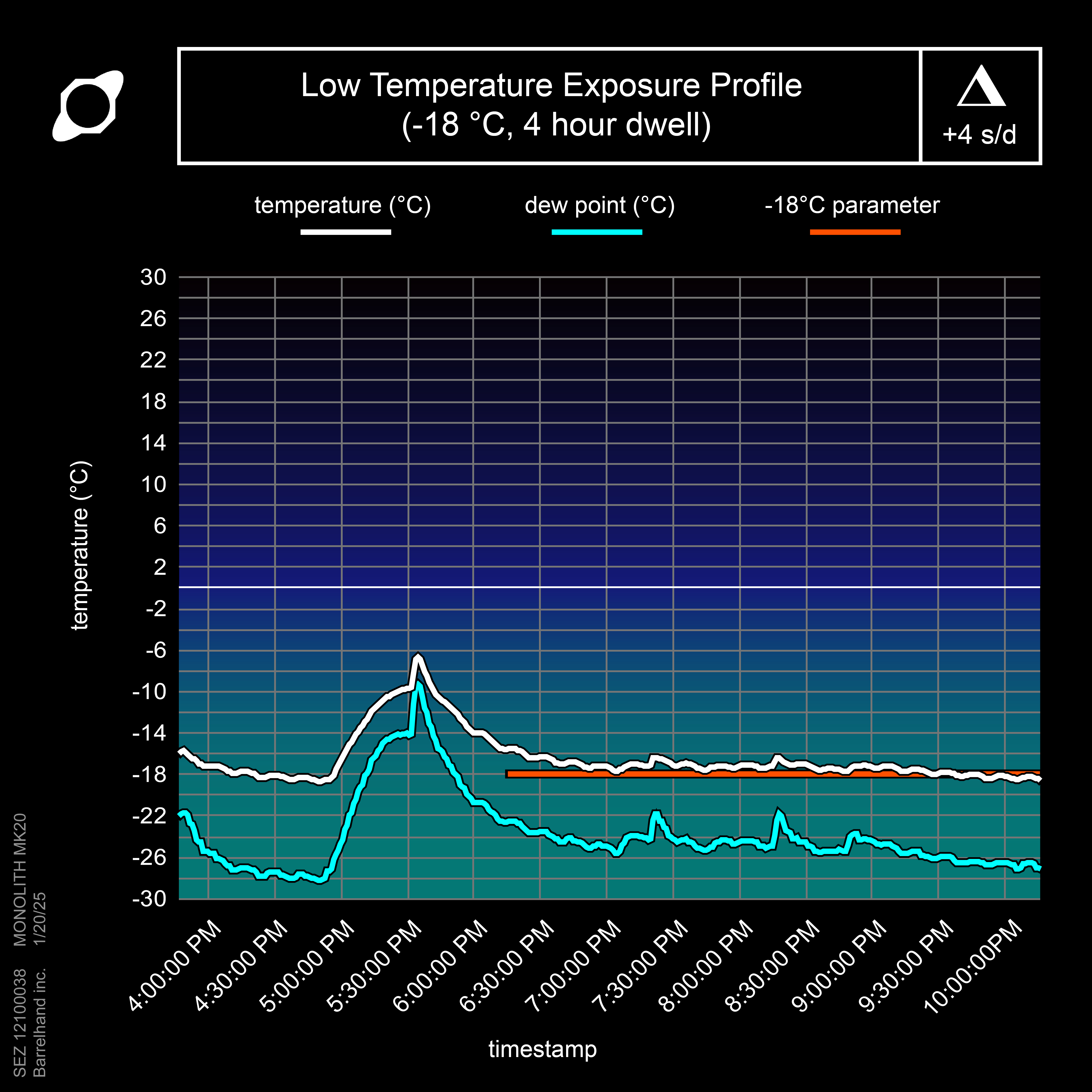
This performance falls well within the nominal range and demonstrates effective insulation from our aircore Scalmalloy chassis engine mount, and engine upgrades. A thin ice sheet formed on top of the crystal when exposed back to ambient air (Fig. 7), but there was no ingress of any kind. Insulation of the oscillator seems to be largely solved and it will be interesting to test far beyond and find its lower limits. Potential future upgrades are limited to 2 main factors: a larger aircore in the chassis, and hardware improvements at the oscillator level.
3. Temperature Pressure Chamber – pressure maximum of 1.47 x 10exp-5 psi (10exp-6 atm) with temperature raised to 160 °F (71 °C). The temperature shall then be lowered to 0 °F (-18 °C) in 45 minutes and raised again to 160 °F in 45 minutes. Fifteen more such cycles shall be completed.
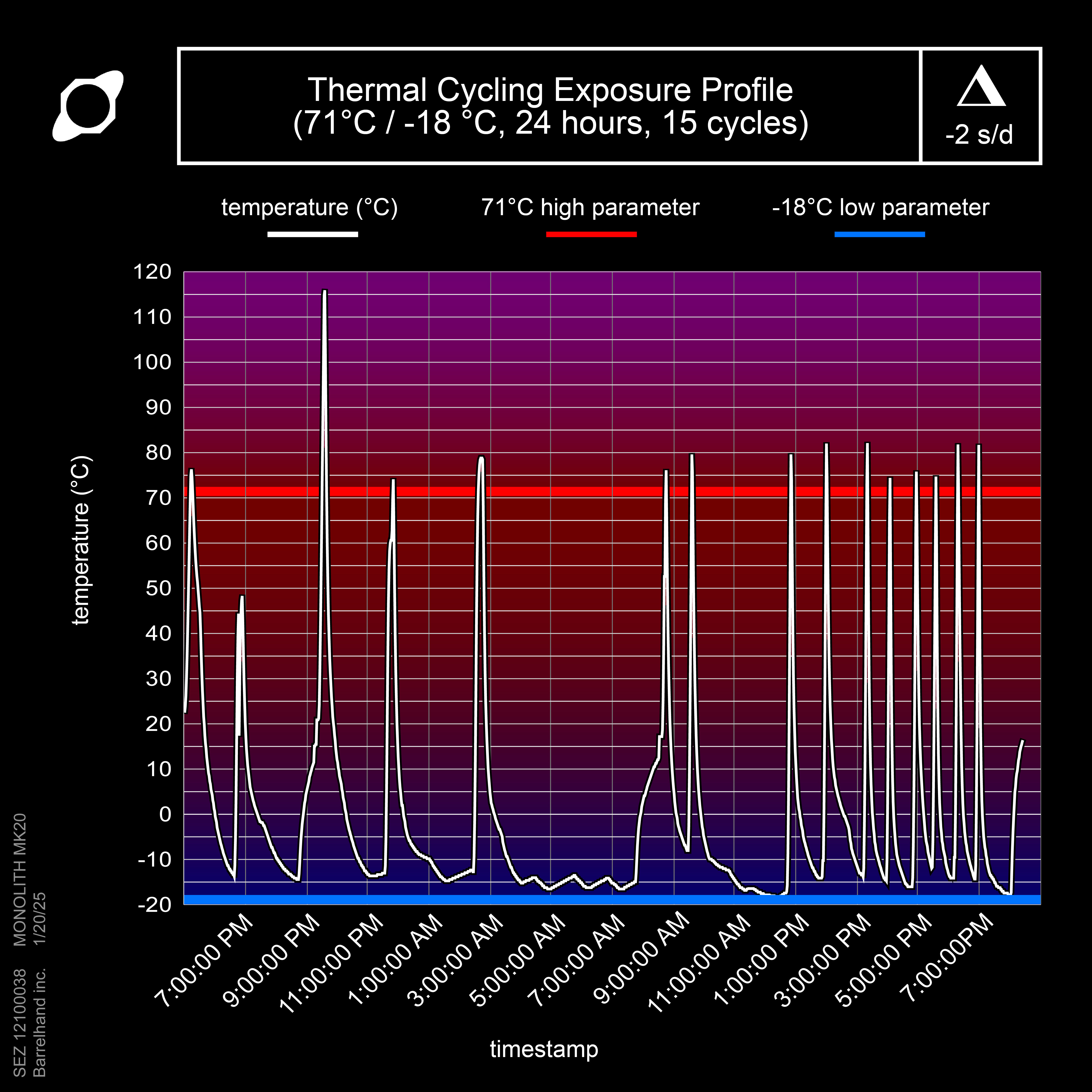
Monolith was subjected to a total of 15 thermal cycles ranging from 116 °C to -20 °C in near vacuum. The test was performed over a span of 24 hours, with a 4 hour, -18 °C dwell period between cycle 5 and 6.
Performance was nominal with only a 2 s/d average loss across 6 positions immediately after test completion. This was a fantastic validation of Monolith’s insulation features, maintaining near perfect stability across such extreme temperature profiles.
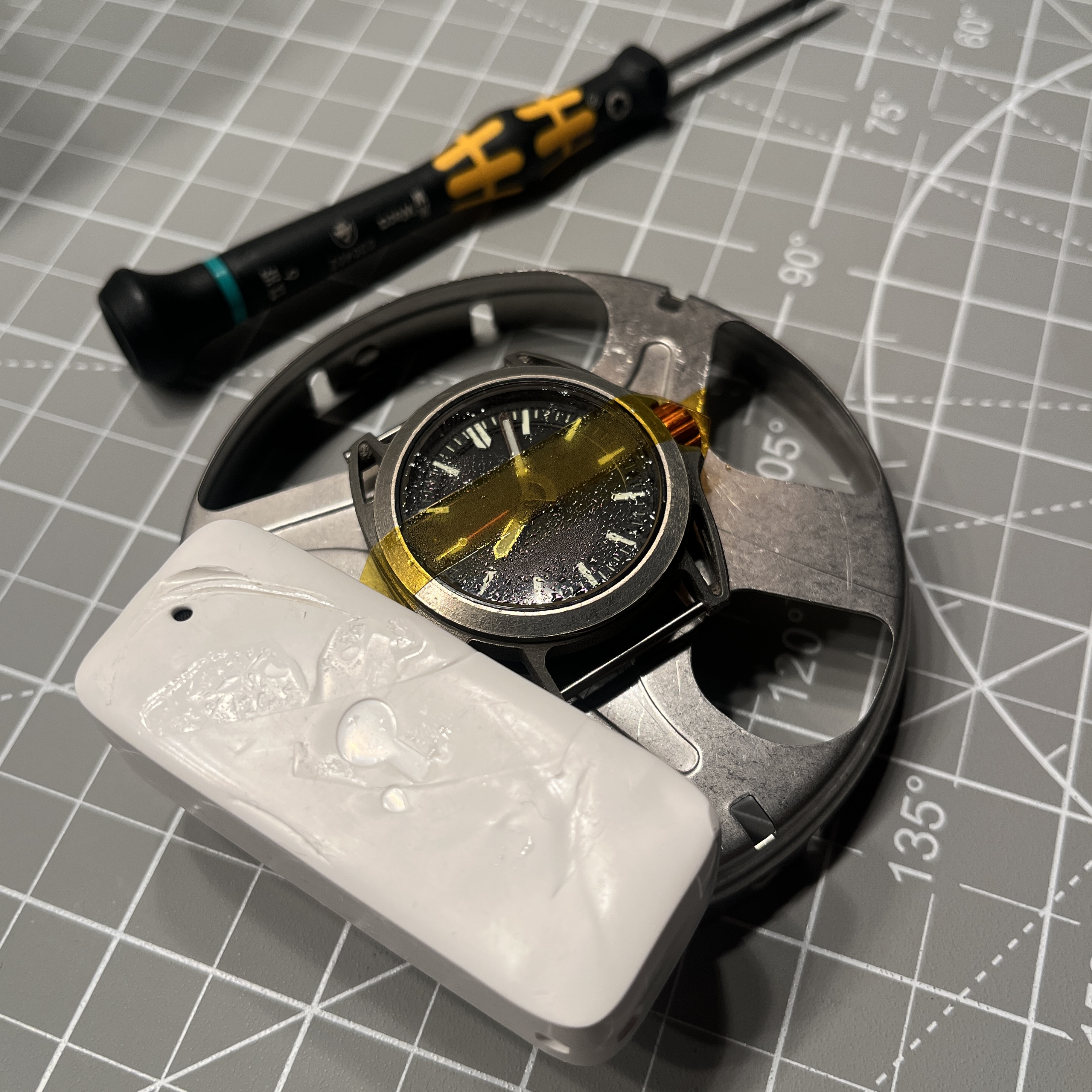
The watch also maintained pressure throughout the thermal cycling, further validating all the coefficient of expansion considerations at the assembly level. If any parts expand or contract non-uniformly to the rest of the assembly it can cause strain or pressure failure over time. No further improvements are necessary for this parameter.
4. Relative Humidity – A total time of 240 hours at temperatures varying between 68 °F and 160 °F (20°C and 71 °C, respectively) in a relative humidity of at least 95%. The steam used shall have a pH value between 6.5 and 7.5.
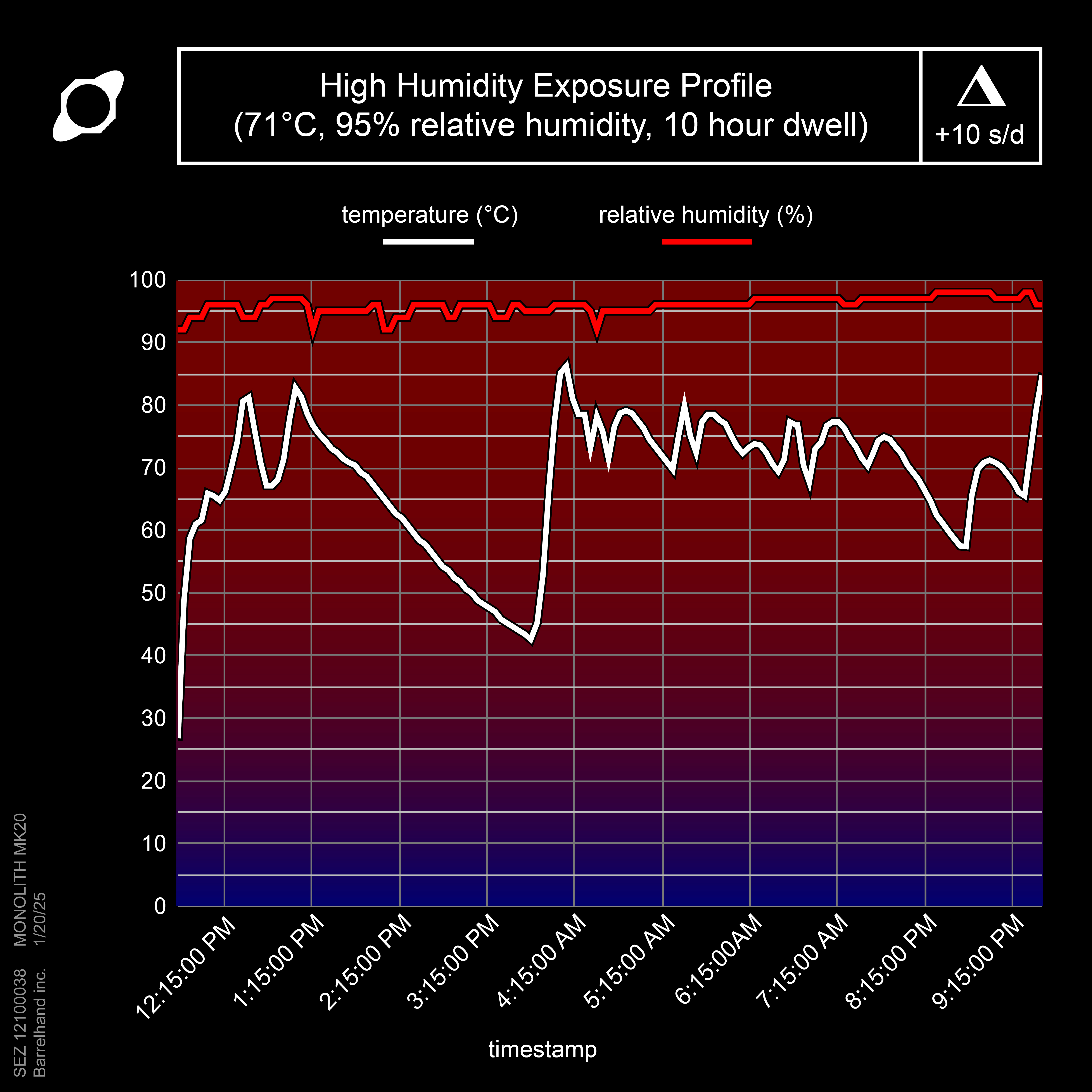
Testing was performed at max temperature of 71 °C in a relative humidity average of 96%. Steam environment tested to a pH of 6.9. Given internal testing constraints we performed a sustained max temp for 10 hours, vs varying between room temp and high temp for 10 days.
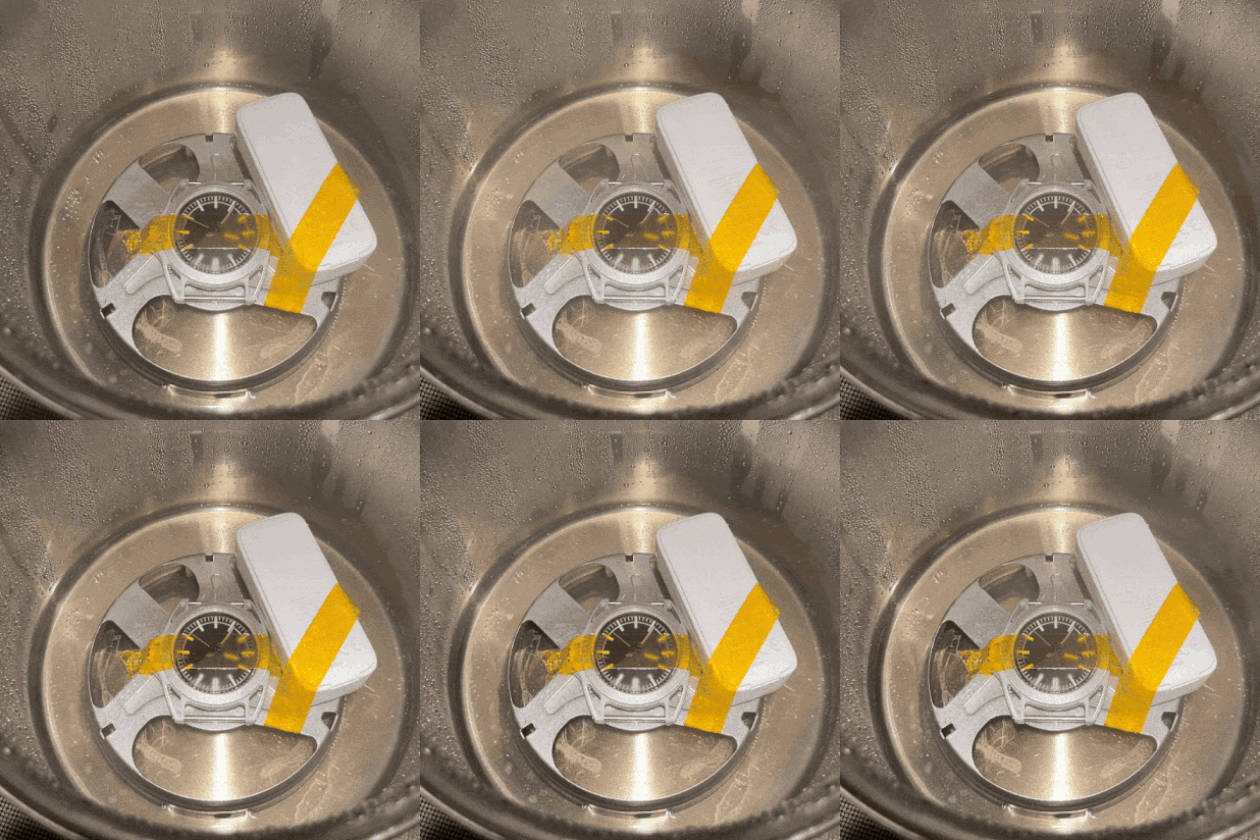
While it is not fully analogous and will require further testing, the 10 hours at 71 °C should represent a more extreme environment than only a few hours a day at max temp. Monolith performed nominally with no leak/gasket failure. There was a 10 s/d gain across 6 positions indicating that further insulation may be necessary for sustained high temp exposures. As mentioned above this can be achieved through larger aircore barriers and upgrades at the oscillator level.
5. Pure Oxygen Atmosphere – The test item shall be placed in an atmosphere of 100% oxygen at a pressure of 5.5 psi (0.35 atm) for 48 hours. Performance outside of specification tolerance, visible burning, creation of toxic gases, obnoxious odors, or deterioration of seals or lubricants shall constitute a failure. The ambient temperature shall be maintained at 160 °F (71 °C).
Pure oxygen atmospheres at high temperatures are extremely flammable, and a representative test for this was not accessible with the given infrastructure in house. This test environment is primarily looking for off-gasing of toxic gases. Given that Monolith follows NASA material standards and ISO 9001 certified manufacturers this should pass nominally. Further testing will need to be done in an aerospace testing facility to validate.
6. Shock - Six shocks of 40g each, in six different directions, with each shock lasting 11 milliseconds.
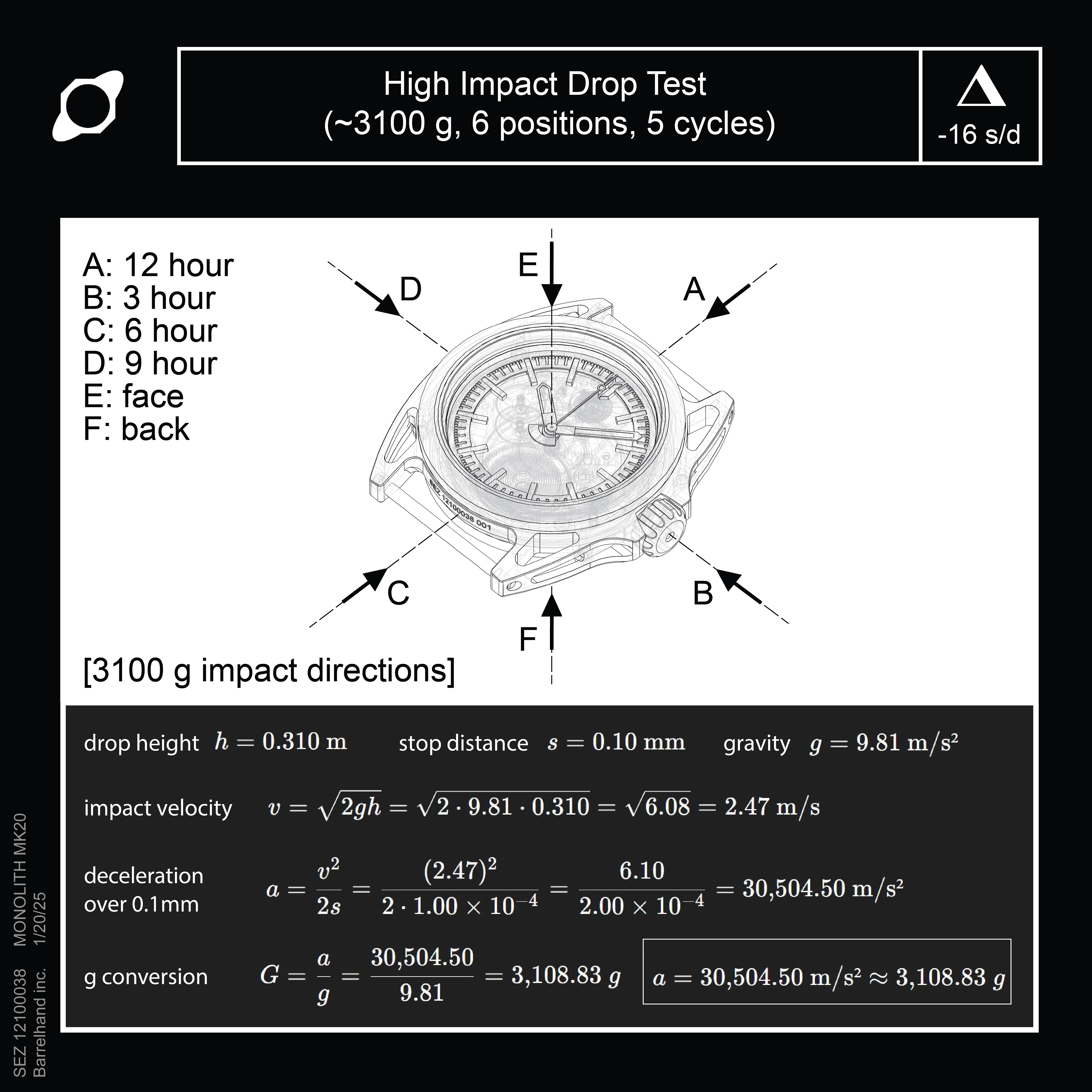
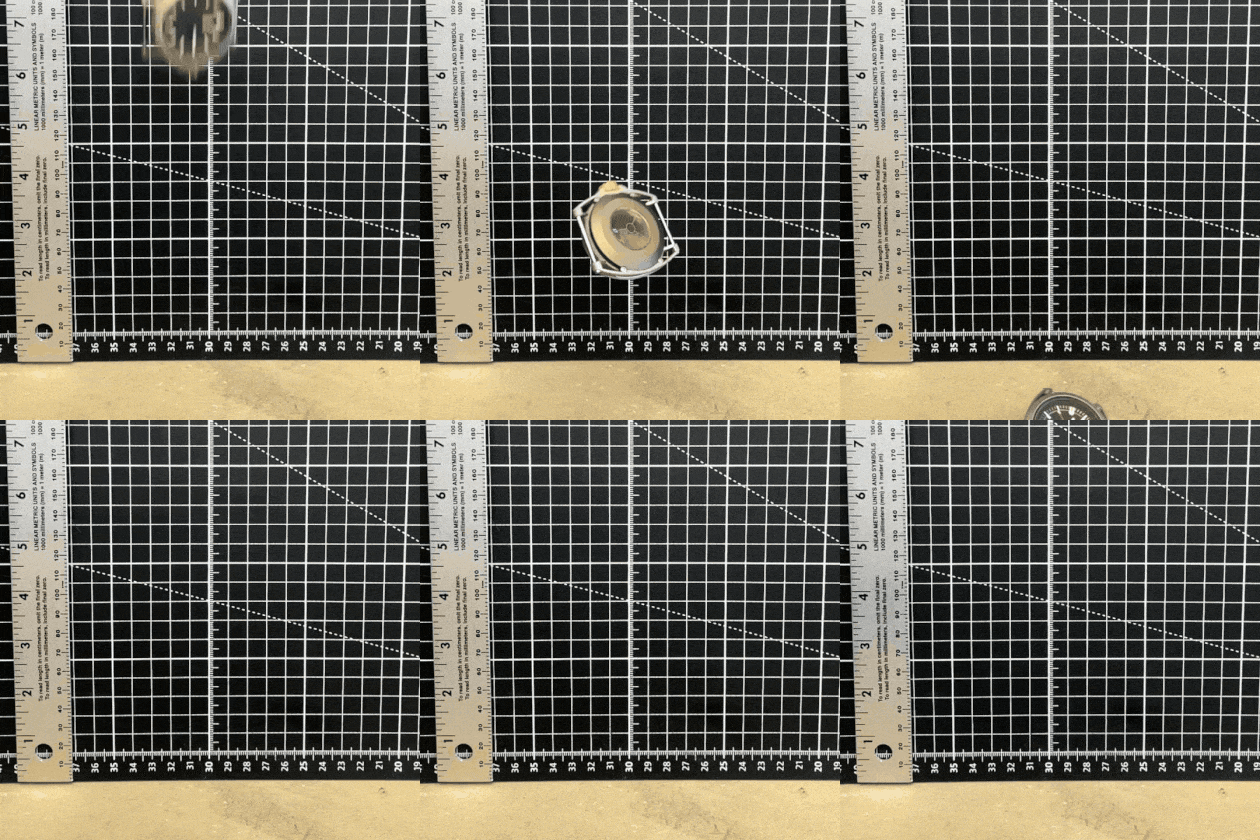
These high impact tests were performed on Monolith by setting a standardized drop height and theoretic stop distance for a Scalmalloy chassis on concrete at impact (0.10mm). The watch was dropped in 6 different positions, face up, face down, 12hr, 3hr, 6hr, and 9hr. Each impact position was repeated 3 times.
Our M1 engine is rated to withstand 555 g and our engine mount shock absorption system has theoretical capabilities to withstand >3000 g. The 40 g threshold is easy to surpass, so we performed our tests with a calculated 3100g at each impact (calculations in Fig. 13).
After a total of 18 high impacts the watch had an average loss of 16 s/d across 6 positions. This performance far exceeds NASA standards and internal expectations (NASA memo, 2008). Further improvements can be made by optimizing our engine mount system to account for larger travel distances. Larger stopping distances would reduce the effective acceleration felt on the engine itself.
7. Acceleration – The test item shall be accelerated linearly from 1g to 7.25g within 333 seconds, along an axis parallel to the longitudinal spacecraft axis.
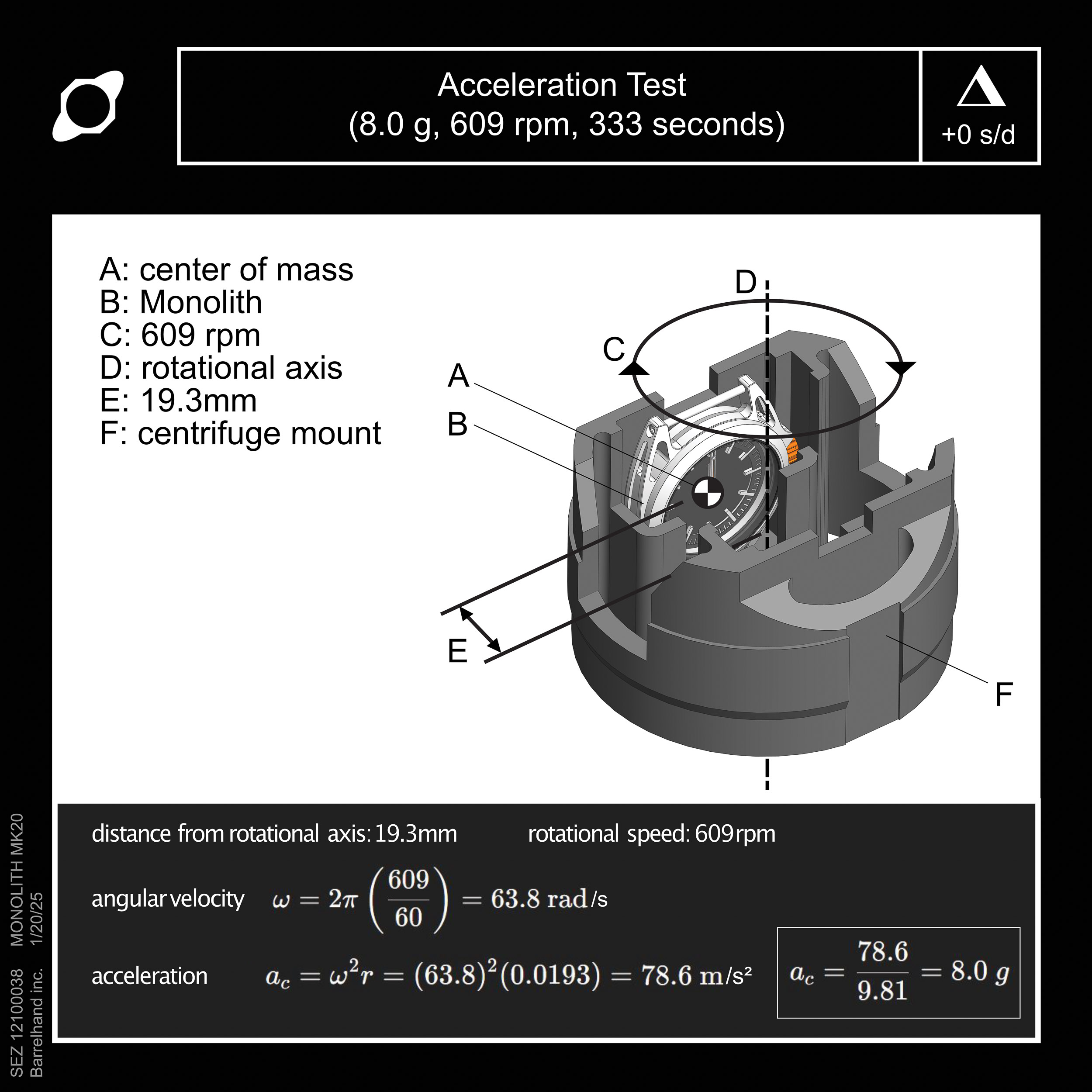
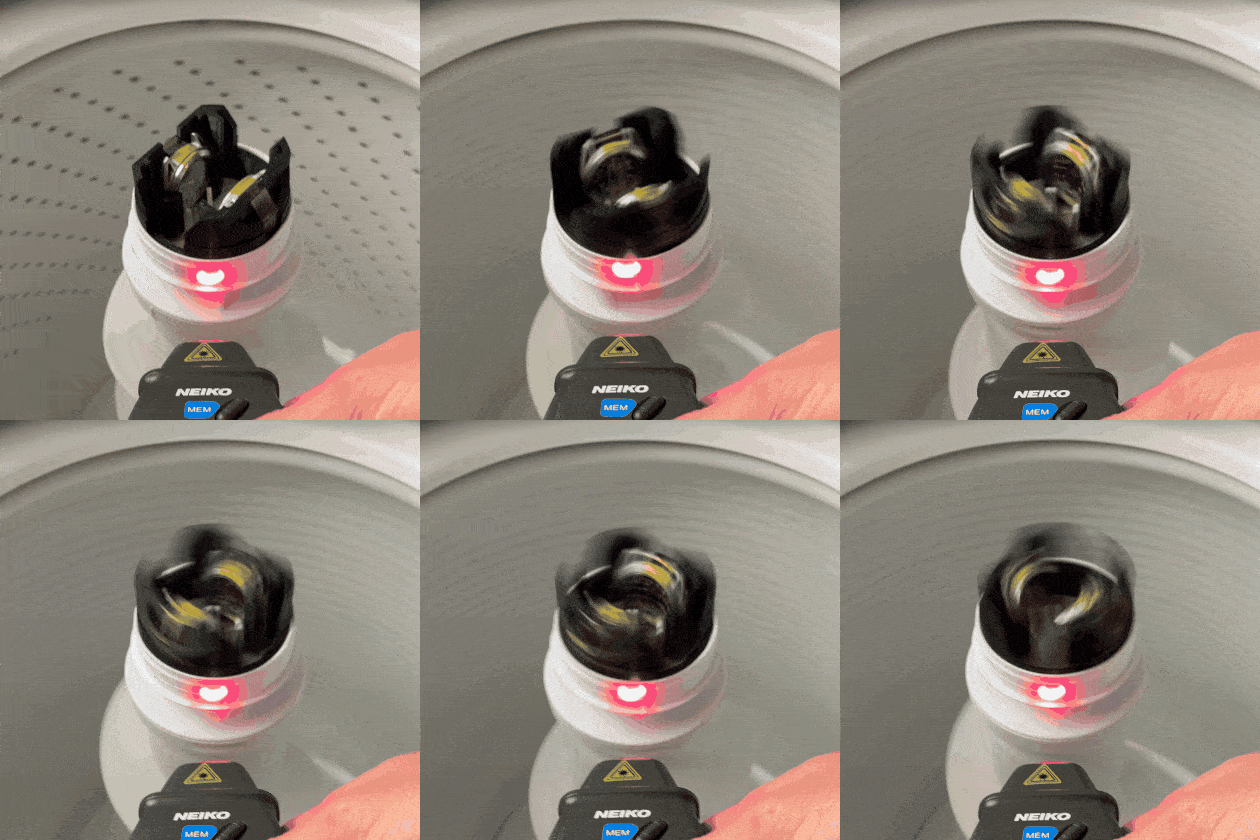
A custom centrifuge was designed and 3D printed in-house to recreate the desired acceleration. A Kenmore 500 series washing machine was used and measured with a Neiko Digital Tachometer to have an average rotational speed of 609 RPM. Calculations in Figure 15 determined the distance from the rotational axis to Monolith’s center of mass to simulate the set acceleration. A custom mount was then 3D printed to house Monolith and perform the test. The test induced slightly higher accelerations of 8.0 g. Monolith was unaffected with no loss/gain average across 6 positions.
8. Decompression – 90 minutes in a vacuum of 1.47 x 10E-5 psi (10 E-6 atm) at a temperature of 160 °F (71 °C), and 30 minutes at a 200 °F (93 °C).
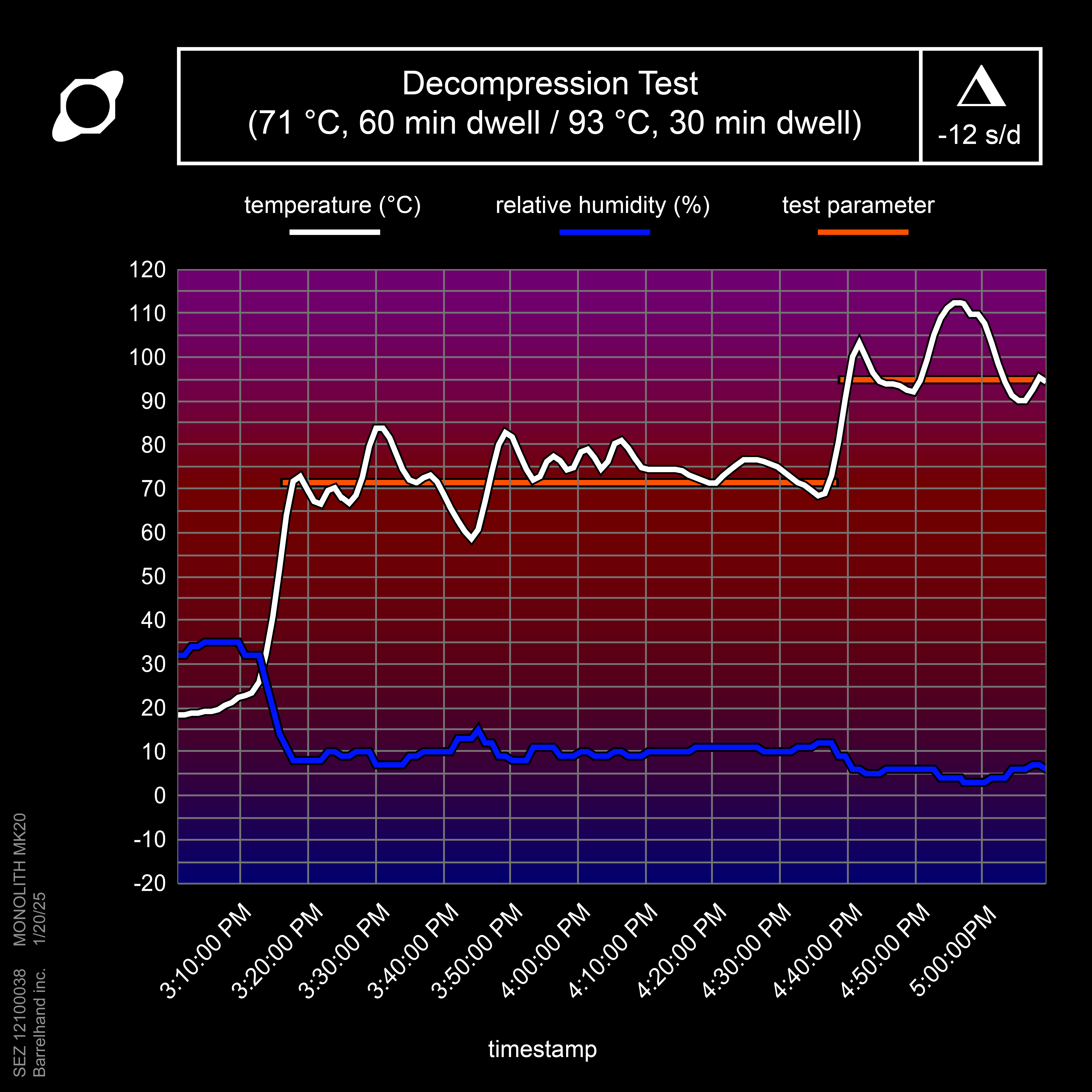
The test was performed on Monolith in near vacuum with a 60 min dwell at 71°C followed by a 30 min dwell at 93 °C. Relative humidity was maintained at ~10%. A peak temperature of 113 °C was reached during testing.
Monolith had an average loss of 12 s/d loss across 6 positions after testing. This aligns with mechanical principles as the hairspring expands in extreme heat, causing oscillation rate to decrease. As the engine returned back to ambient temperatures, timing accuracy also improved. This will need to be further studied to understand the relation to exposure time and rebound rate.
9. High Pressure – The test item shall be subjected to a pressure of 23.5 psi (1.6 atm) for a minimum period of one hour.
Pressure integrity has been thoroughly tested and documented ranging from Vacuum (-1 ATM) all the way to 58 ATM with no breach registered. Further testing is also being performed on our Airlock Crown and has demonstrated to be operable for winding and time setting at a depth of 30m.
10. Vibration – Three cycles of 30 minutes (lateral, horizontal, vertical, the frequency varying from 5 to 2000 cps and back to 5 cps in 15 minutes. Average acceleration per impulse must be at least 8.8 g.
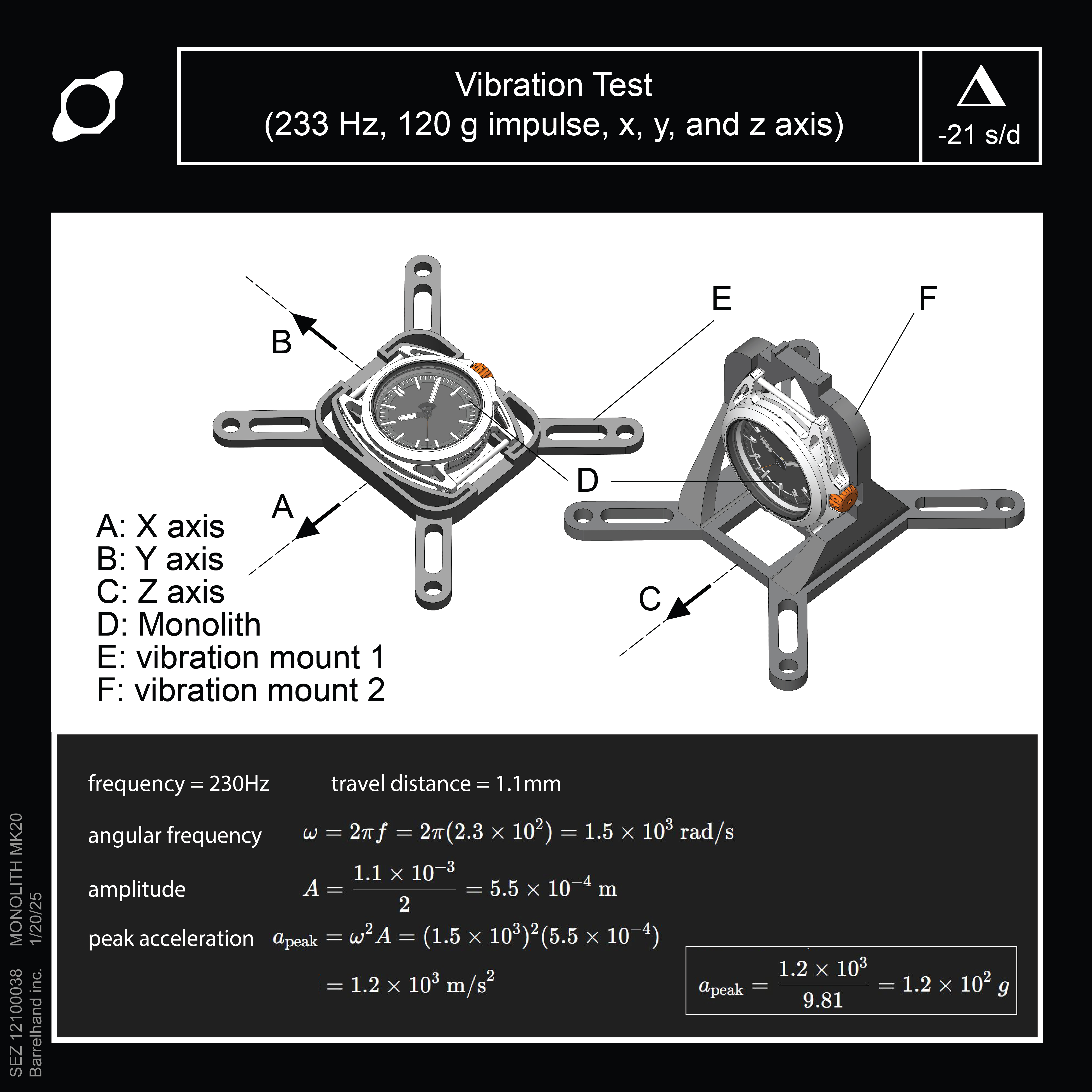
A custom testing rig was developed using a Dewalt DWE6411sander and a 3D printed mount to position the Monolith across X,Y and Z axes. The DWE6411 has a frequency of 14,000 RPM or ~233 hz. The stroke of each oscillation has a travel distance of 1.1mm creating an effective impulse 120 g (Fig. 18).
This is far more aggressive than the 8.8 g recommended impulse, but it is the parameters that were available in-house. It is 3x the outlined impact protocol from test 6, and it is happening in multiaxis 230 times a second.
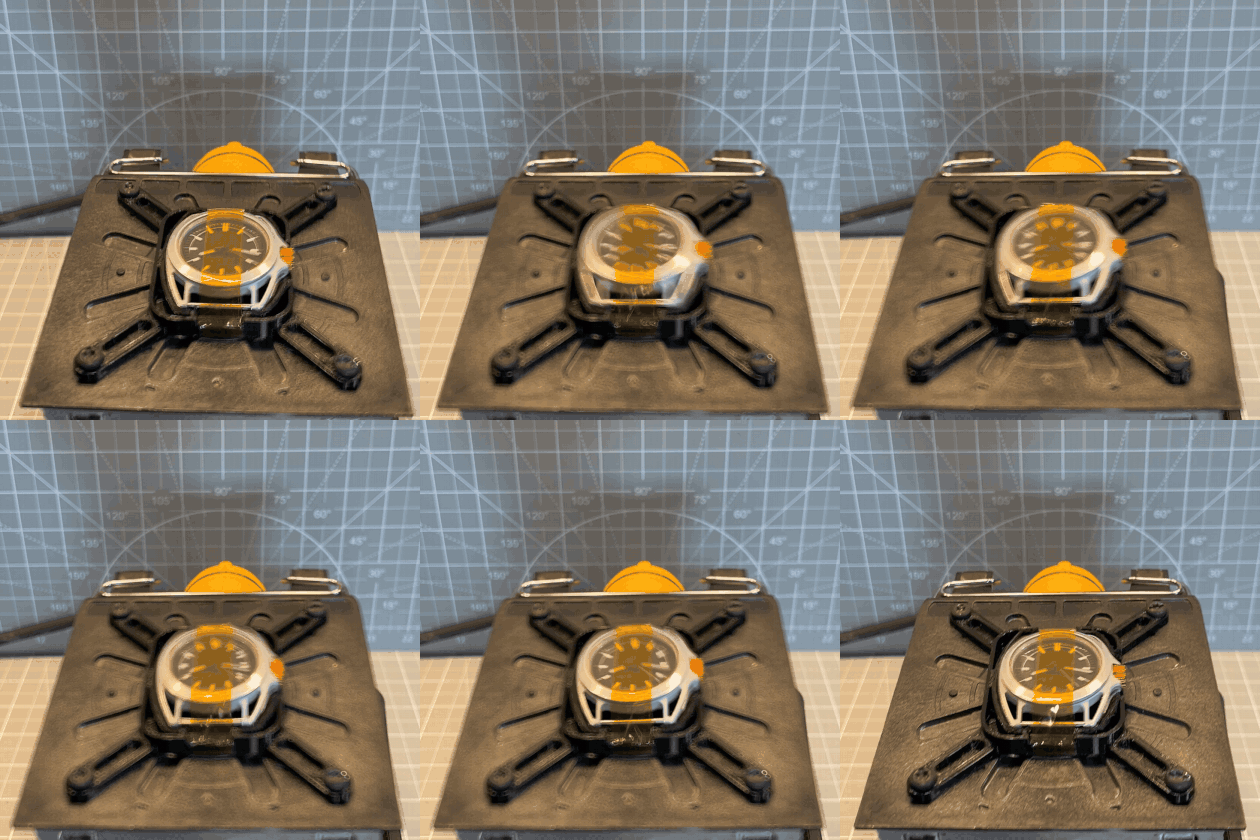
Testing was performed in each axis for a total of 5 minutes before the mounts holding Monolith began to disintegrate. Across such harsh testing conditions only 21 s/d was lost across a 6 position average. All hardware such as screws, torx bars etc remained intact with no visible defects. Further testing will need to be done in an official Aerospace testing environment to validate, but we would expect much more minimal timing discrepancies than those seen from this preliminary test.
11. Acoustic Noise – 130dB over a frequency range from 40 to 10,000 HZ, for a duration of 30 minutes.
We did not have the necessary hardware in house to test this parameter. Given the harsh environment/vibrations of test 10, we would expect minimal effects to accuracy, but further testing will need to be performed to confirm.
If you have access to a sound system that can hit these decibel levels and frequency ranges we would love to hear from you and experiment. Send us a message at contact@barrelhand.com.
12. Glass Impact – 360 gram steel impact tip dropped onto glass samples from various heights.
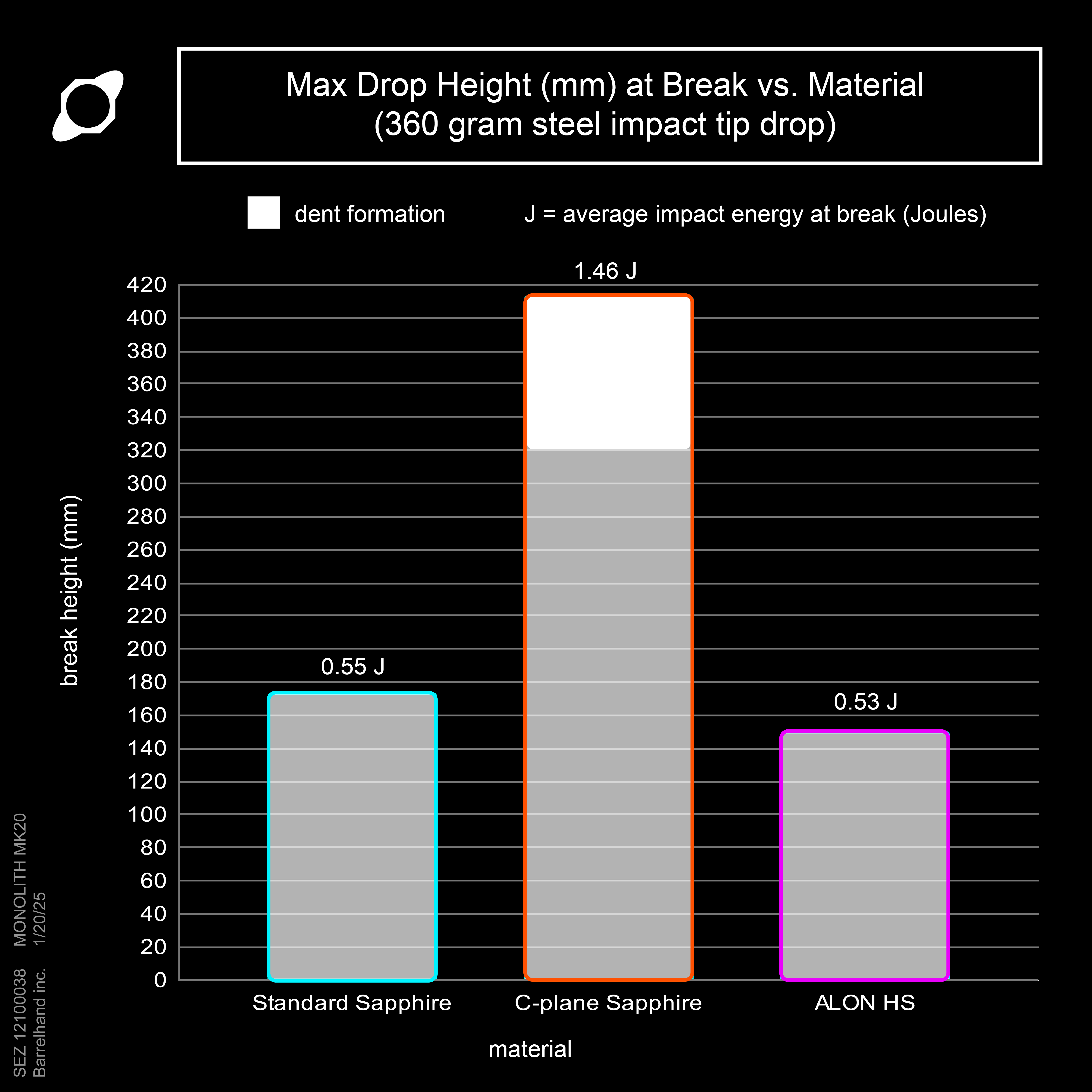
A glass impact test was not officially outlined in the original memorandum, so we created a measurable standard for future developments. We performed a series of drop tests using a 360 gram steel impact tip dropped from various heights onto the center of glass samples. In the test we looked at traditional sapphire, C-plane sapphire from Guild Optics, and a material known as transparent aluminum with 3x the fracture toughness of borosilicate glass (Surmet, 2015) (NASA, 2017). 3 samples of each material were used. The C-plane from Guild Optics outperformed traditional sapphire and transparent aluminum by a factor of nearly 2.5x the impact force.
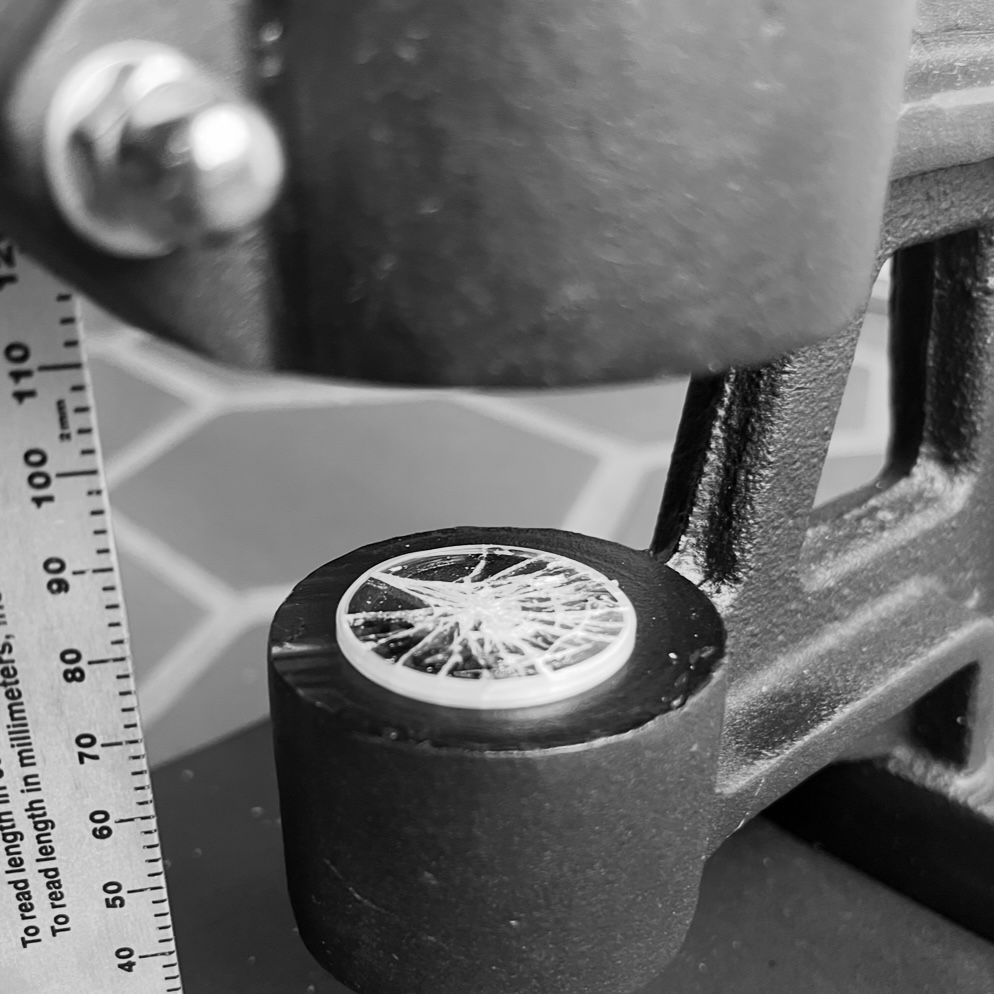
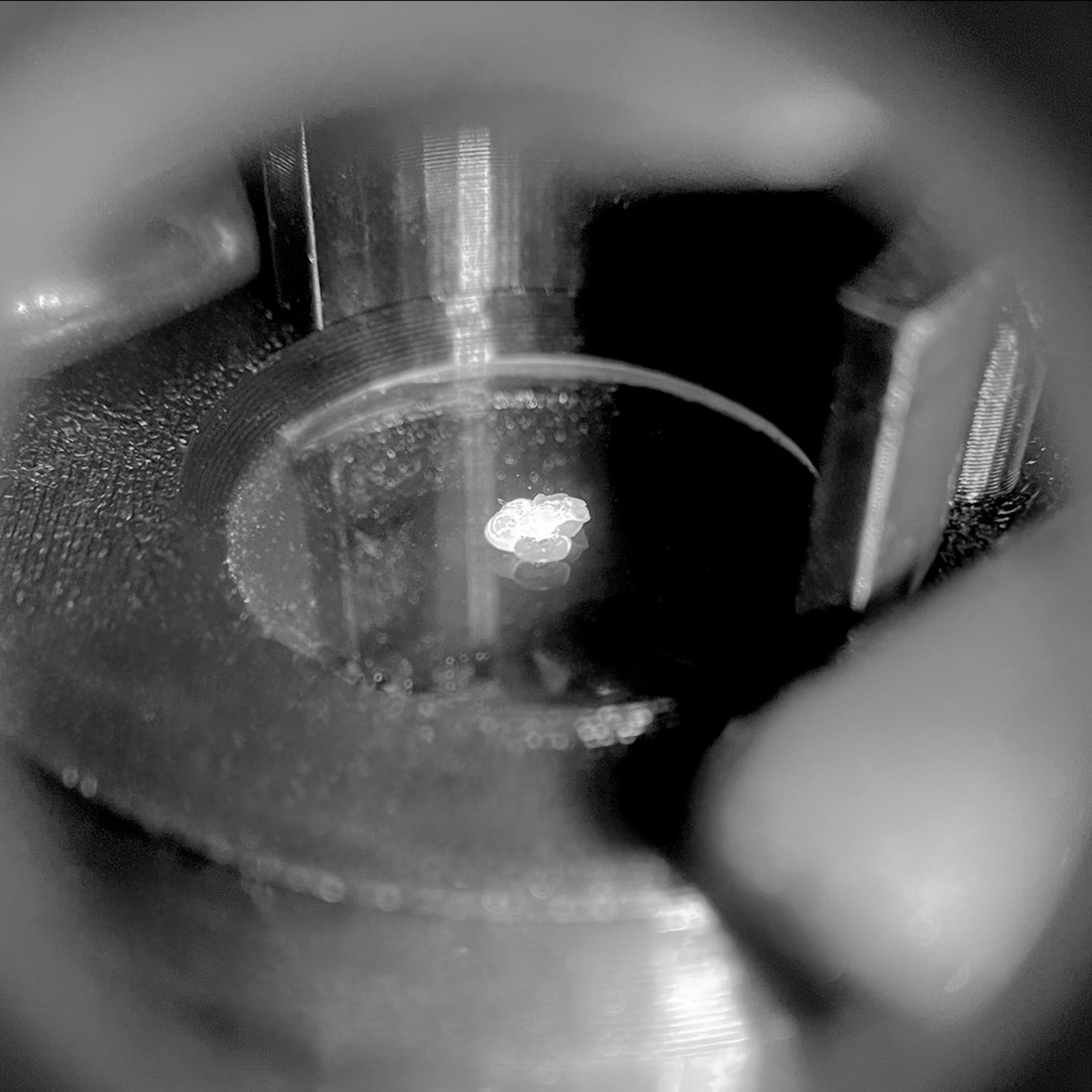
It is important to note that the C-plane sapphire also displayed an anti-spalling characteristic, effectively denting under high loads before catastrophic failure (Fig. 22). This is most likely due to the grain orientation compared to traditional sapphire, and also contributes to its high impact resistance (Meller Optics, 2022).
It was assumed that Hesalite was the only option to prevent shatter resistance, but theoretically with the right factor of safety, other materials may also be suitable with the advantage of not scratching so easily. While a specific force is not specified as each device/size of glass carries different risks, we can go based off of NASA-STD-5018 section 4.3.3 stating a load requirement of 685 N (154 lb) (limit), applied as a uniform pressure load over a 10.2-cm by 10.2-cm (NASA, 2011).
This is well within the safety margin pressures even traditional sapphire can withstand, so the next failure mode we looked at was a sharp metal impact (bumping the watch against something). We can use Hesalite as a reference point as the only current standard issue. For a 30mmx2mm thick Hesalite (PMMA / Acrylic) window on a steel case we can calculate a theoretical impact maximum of ~1.5 Joules for through failure. This is nearly identical to the tested failure average of our C-plane sapphire on steel (1.46 Joules). A factor of safety is further added by incorporating our Hytrel suspension system in the chassis/window assembly, effectively cushioning the glass during a sharp impact rather than resting directly on metal. The absorption force of the Hytrel suspension is calculated to nearly double impact resistance to ~3 Joules, but further testing will need to be done to validate. We would also like to test a standard issue Speedmaster unit side by side to compare impact resistances directly to our theoretical.
While we could have implemented a simple PMMA / Acrylic crystal, we wanted to explore alternatives which do not degrade/scratch easily over time. A solution which exhibits scratch resistance of sapphire and impact resistance of Hesalite is the optimal solution for longevity and legibility.
Conclusion:
Monolith’s performance throughout EVA testing substantially exceeded both internal expectations and historical benchmarks. From extreme thermal cycling to multi-axial 3000 g impacts, there were no pressure or hardware failures of any kind, and a cumulative worst-case timing deviation of −57 seconds per day across the full test campaign. For context, the Speedmaster gained 21 minutes during decompression testing alone, an environment where Monolith only lost an average of 12 seconds per day across all 6 positions.
The EVA testing of the 1960s revealed that even the greatest off the shelf watches were never designed to withstand the harsh conditions of space exploration. NASA documentation from Apollo through modern programs records hardware failures, lume degradation, and strap issues (NASA, 2005). This does not represent the craftsmanship of these legacy pieces, but rather a demonstration of how harsh the environments of space can be. Although numerous performance improvements were outlined as necessary, many of these problems were never fully addressed over the last 60 years and adequate hardware remains imperative for the next chapter of space exploration.
Redundant analog systems are critical in space exploration, especially for something as vital as timekeeping. Monolith was engineered from the ground up specifically to meet modern EVA and IVA requirements, incorporating lessons learned from six decades of documented operational experience. After six years of focused R&D with leaders across industries, testing has validated the core mechanical concepts, material choices, and system-level decisions that enable Monolith to operate reliably in one of the harshest environments ever encountered. In all ground-based testing conducted to date, Monolith has demonstrated superior precision, reliability, and durability relative to historical benchmarks and modern standards.
Next Steps:
While third-party validation remains an important next step, the current results establish a strong technical foundation for the mission-driven platform. The current three-hand, time-only configuration was selected deliberately as a robust baseline, from which additional functionality such as chronographs can be developed in response to evolving operational needs.
We are actively seeking collaboration with EVA Operations teams, engineers, and current or former astronauts interested in independently evaluating the platform.
The complete Monolith assembly CAD files will be open-sourced at launch to encourage independent review by the community and help build more robust systems. Open sourcing the platform is also necessary for long term servicing and upgrades in space, where traditional service centers and spare parts will not be available, and on-site printing/manufacturing will be standard. Early access to the files is available upon request at contact@barrelhand.com
This is only the beginning of the journey.
Let's go to space.
-Karel
References:
BARRON, J. (2024). CHINA ASTRONAUT SPACEWALK RECORD. THE NEW YORK TIMES. HTTPS://WWW.NYTIMES.COM/2024/12/19/WORLD/ASIA/CHINA-ASTRONAUT-SPACEWALK-RECORD.HTML
CHRONOCENTRIC FORUMS (2008). NASA MEMO. HTTPS://CHRONOCENTRIC.COM/FORUMS/HEUER/INDEX.CGI?MD=READ;ID=20860
SURMET (2015). ALON TECHNICAL DATA SHEET. HTTPS://WWW.CIAL.IT/WP-CONTENT/UPLOADS/2015/11/ALON-SCHEDA-TECNICA.PDF
RUSSELL, M. (2021). SCUBA DIVING WORLD RECORDS. DIVE MAGAZINE. HTTPS://DIVEMAGAZINE.COM/SCUBA-DIVING-NEWS/SCUBA-DIVING-WORLD-RECORDS
SLAYTON, D. (1964) FORSTNERBANDS.COM. D. SLAYTON REQUISITION MEMO. HTTPS://FORSTNERBANDS.COM/PAGES/D-SLAYTON-REQUISITION-MEMO?SRSLTID=AFMBOORU24NQME5IBY4IJAJMLIT2EGRIUWLSNM29MQQNMRTDBRBS2XQD&UTM
BROER, R. (2015). FRATELLO WATCHES Q&A WITH APOLLO 15 ASTRONAUT DAVE SCOTT. FRATELLO WATCHES. HTTPS://WWW.FRATELLOWATCHES.COM/FRATELLO-WATCHES-QA-WITH-APOLLO-15-ASTRONAUT-DAVE-SCOTT/#GREF
FORSTER, J. (2022). A SONG OF TIME AND TEMPERATURE. HODINKEE. HTTPS://WWW.HODINKEE.COM/ARTICLES/A-SONG-OF-TIME-AND-TEMPERATURE
MELLER OPTICS. (2022). SAPPHIRE WHITE PAPER [PDF]. HTTPS://MELLEROPTICS.COM/WP-CONTENT/UPLOADS/2022/10/SAPPHIRE-WHITE-PAPER-FINAL-REV-A.PDF
NASA. (1988). LIGHT FUNNEL CONCENTRATOR PANEL FOR SOLAR POWER (NASA TECHNICAL REPORT NO. 19880003488). HTTPS://NTRS.NASA.GOV/API/CITATIONS/19880003488/DOWNLOADS/19880003488.PDF?UTM
NASA. (2005). THE EFFECTS OF LUNAR DUST ON EVA SYSTEMS DURING THE APOLLO MISSIONS (NASA TECHNICAL REPORT NO. 20050160460). HTTPS://NTRS.NASA.GOV/API/CITATIONS/20050160460/DOWNLOADS/20050160460.PDF
NASA. (2011). STRENGTH DESIGN AND VERIFICATION CRITERIA FOR GLASS, CERAMICS, AND WINDOWS IN HUMAN SPACE FLIGHT APPLICATIONS. NASA-STD-5018. HTTPS://STANDARDS.NASA.GOV/SITES/DEFAULT/FILES/STANDARDS/NASA/BASELINE-W/CHANGE-1/1/HISTORICAL/2011-08-12_NASA-STD-5018-BASELINE_FINAL_0.PDF
NASA. (2017). CRACK GROWTH TESTING OF AN ALUMINUM OXYNITRIDE (ALON) FOR INTERNATIONAL SPACE STATION KICK PANES (NASA TECHNICAL REPORT NO. 20170001289). HTTPS://NTRS.NASA.GOV/API/CITATIONS/20170001289/DOWNLOADS/20170001289.PDF
RC TRITEC. (N.D.). SWISS SUPER‑LUMINOVA GRADE X2‑GL. RETRIEVED FEBRUARY 6, 2026, FROM HTTPS://WWW.RCTRITEC.COM/EN/SUPERLUMINOVA/NEWS/SWISS-SUPER-LUMINOVA-GRADE-X2-GL-EN
SPECIALCHEM.COM. (2025). GUIDE TO GLASS TRANSITION TEMPERATURE. HTTPS://WWW.SPECIALCHEM.COM/PLASTICS/GUIDE/GLASS-TRANSITION-TEMPERATURE
MARX, J. (2017). NASA TESTING REGIME: OMEGA SPEEDMASTER MOONWATCH. TWENTYTWOTEN. HTTPS://WWW.TWENTYTWOTEN.COM/1574/NASA-TESTING-REGIME-OMEGA-SPEEDMASTER-MOONWATCH/
WATCHUSEEK FORUMS. (2016). 1964 SLAYTON WATCH PROCUREMENT LETTER. HTTPS://WWW.WATCHUSEEK.COM/THREADS/1964-SLAYTON-WATCH-PROCUREMENT-LETTER.3085090/
BARRON, J. (2024). CHINA ASTRONAUT SPACEWALK RECORD. THE NEW YORK TIMES. HTTPS://WWW.NYTIMES.COM/2024/12/19/WORLD/ASIA/CHINA-ASTRONAUT-SPACEWALK-RECORD.HTML
CHRONOCENTRIC FORUMS (2008). NASA MEMO. HTTPS://CHRONOCENTRIC.COM/FORUMS/HEUER/INDEX.CGI?MD=READ;ID=20860
SURMET (2015). ALON TECHNICAL DATA SHEET. HTTPS://WWW.CIAL.IT/WP-CONTENT/UPLOADS/2015/11/ALON-SCHEDA-TECNICA.PDF
RUSSELL, M. (2021). SCUBA DIVING WORLD RECORDS. DIVE MAGAZINE. HTTPS://DIVEMAGAZINE.COM/SCUBA-DIVING-NEWS/SCUBA-DIVING-WORLD-RECORDS
SLAYTON, D. (1964) FORSTNERBANDS.COM. D. SLAYTON REQUISITION MEMO. HTTPS://FORSTNERBANDS.COM/PAGES/D-SLAYTON-REQUISITION-MEMO?SRSLTID=AFMBOORU24NQME5IBY4IJAJMLIT2EGRIUWLSNM29MQQNMRTDBRBS2XQD&UTM
BROER, R. (2015). FRATELLO WATCHES Q&A WITH APOLLO 15 ASTRONAUT DAVE SCOTT. FRATELLO WATCHES. HTTPS://WWW.FRATELLOWATCHES.COM/FRATELLO-WATCHES-QA-WITH-APOLLO-15-ASTRONAUT-DAVE-SCOTT/#GREF
FORSTER, J. (2022). A SONG OF TIME AND TEMPERATURE. HODINKEE. HTTPS://WWW.HODINKEE.COM/ARTICLES/A-SONG-OF-TIME-AND-TEMPERATURE
MELLER OPTICS. (2022). SAPPHIRE WHITE PAPER [PDF]. HTTPS://MELLEROPTICS.COM/WP-CONTENT/UPLOADS/2022/10/SAPPHIRE-WHITE-PAPER-FINAL-REV-A.PDF
NASA. (1988). LIGHT FUNNEL CONCENTRATOR PANEL FOR SOLAR POWER (NASA TECHNICAL REPORT NO. 19880003488). HTTPS://NTRS.NASA.GOV/API/CITATIONS/19880003488/DOWNLOADS/19880003488.PDF?UTM
NASA. (2005). THE EFFECTS OF LUNAR DUST ON EVA SYSTEMS DURING THE APOLLO MISSIONS (NASA TECHNICAL REPORT NO. 20050160460). HTTPS://NTRS.NASA.GOV/API/CITATIONS/20050160460/DOWNLOADS/20050160460.PDF
NASA. (2011). STRENGTH DESIGN AND VERIFICATION CRITERIA FOR GLASS, CERAMICS, AND WINDOWS IN HUMAN SPACE FLIGHT APPLICATIONS. NASA-STD-5018. HTTPS://STANDARDS.NASA.GOV/SITES/DEFAULT/FILES/STANDARDS/NASA/BASELINE-W/CHANGE-1/1/HISTORICAL/2011-08-12_NASA-STD-5018-BASELINE_FINAL_0.PDF
NASA. (2017). CRACK GROWTH TESTING OF AN ALUMINUM OXYNITRIDE (ALON) FOR INTERNATIONAL SPACE STATION KICK PANES (NASA TECHNICAL REPORT NO. 20170001289). HTTPS://NTRS.NASA.GOV/API/CITATIONS/20170001289/DOWNLOADS/20170001289.PDF
RC TRITEC. (N.D.). SWISS SUPER‑LUMINOVA GRADE X2‑GL. RETRIEVED FEBRUARY 6, 2026, FROM HTTPS://WWW.RCTRITEC.COM/EN/SUPERLUMINOVA/NEWS/SWISS-SUPER-LUMINOVA-GRADE-X2-GL-EN
SPECIALCHEM.COM. (2025). GUIDE TO GLASS TRANSITION TEMPERATURE. HTTPS://WWW.SPECIALCHEM.COM/PLASTICS/GUIDE/GLASS-TRANSITION-TEMPERATURE
MARX, J. (2017). NASA TESTING REGIME: OMEGA SPEEDMASTER MOONWATCH. TWENTYTWOTEN. HTTPS://WWW.TWENTYTWOTEN.COM/1574/NASA-TESTING-REGIME-OMEGA-SPEEDMASTER-MOONWATCH/
WATCHUSEEK FORUMS. (2016). 1964 SLAYTON WATCH PROCUREMENT LETTER. HTTPS://WWW.WATCHUSEEK.COM/THREADS/1964-SLAYTON-WATCH-PROCUREMENT-LETTER.3085090/